
State emergency chief details Kerr County failures, calls for overhaul of Texas disaster response
Chief Nim Kidd, director of the Texas Division of Emergency Management, testified before the joint General Investigating Committee on the July 2025 Flooding Events, delivering both a frank accounting of local failures and a set of proposed legislative reforms he said are long overdue.
TDEM’s Nim Kidd tells legislators local emergency managers needed only three hours of training, proposes sweeping reforms
AUSTIN — Texas’ top emergency manager told a legislative committee Tuesday that when the July 4, 2025, flood struck Kerr County, local officials were unreachable, overwhelmed and operating in complete isolation from one another — and that state law gave him no authority to do anything about it.
Chief Nim Kidd, director of the Texas Division of Emergency Management, testified before the joint General Investigating Committee on the July 2025 Flooding Events, delivering both a frank accounting of local failures and a set of proposed legislative reforms he said are long overdue.
Unreachable when it mattered most
The National Weather Service began attempting to reach Kerr County officials at 3:38 a.m. on July 4. The county’s emergency management coordinator was not reached until 6:19 a.m. The Kerr County Sheriff’s Office was not reached until 4:32 a.m.
What the committee did not address — and what Kidd did not raise — is that by 3:38 a.m., people were already dying. The first fatalities of the night occurred at approximately 3:30 a.m. at River Inn, west of Camp Mystic. Nor did the hearing acknowledge that the Sheriff’s Office lines were not simply unanswered. According to an April 9 report by the U.S. Department of Commerce Office of Inspector General, 911 dispatch was already fielding 87 calls from the Hunt area in that single hour, causing incoming NWS calls to be immediately disconnected. The system was not asleep. It was already overwhelmed.
When Kidd arrived on the scene July 4, he found the Kerr County Incident Command Center and the City of Kerrville operating in separate silos with no unified command in place. Under Chapter 418 of the Texas Government Code, the state’s legal role is strictly to coordinate and support local governments — not to command or control them. Rather than pushing local officials aside, Kidd said TDEM’s approach was to bring an overwhelming amount of resources to wrap around the struggling local command. In Kerr County, that meant gently encouraging the county and city to share a single facility and establish unified command. They had not done so on their own.
When no incident command post exists at all — a critical failure under the National Incident Management System — Kidd said a state agency will sometimes step in to establish one temporarily before transitioning control back to local authorities.
When Chairman Morgan Meyer asked Kidd to summarize the “incompetence” of local Kerr County officials and its contribution to families’ grief, Kidd declined to use the word. He reminded the committee that TDEM is a response and coordination agency, not an investigative or regulatory one, and deferred the assessment of local failures to the investigative team. The facts he presented, however, spoke clearly enough.
The takeover question
Rep. Joe Moody asked directly whether the state should have legal authority to bypass local officials and assume control when a local response is clearly failing.
Kidd gave a carefully qualified answer. While it might seem logical to let trained state professionals take over a mismanaged crisis, he warned against changing the law to allow it. If the state assumes the legal power to take over, he argued, it could breed dangerous complacency at the local level — jurisdictions might abandon their own preparedness efforts entirely, assuming the state would simply step in.
Moody acknowledged the tension, calling it a complex “trip line.” The legislature, he said, must find a way to address local incompetence without giving local officials an incentive to pass the buck to the state. No resolution was offered.
Three hours of training
Kidd identified what he called a massive loophole in state law: while police officers and paid firefighters must graduate from certified academies with approved curricula, a person needs only three hours of training and the signature of a mayor or county judge to become a local emergency management coordinator in Texas.
“That needs to change,” he said.
He also noted that volunteer firefighters — who cover vast portions of the state and are critical components of local incident command — face zero state training mandates. A person can join a volunteer department without ever completing swift-water rescue, fire suppression or emergency medical training.
“Weather is not science. It’s art.”
Kidd pushed back against the expectation that meteorologists can provide precise, actionable predictions before a disaster. “Weather is not science,” he said. “It’s art.” Forecasters blend multiple mathematical models — none perfectly accurate — and no jurisdiction can responsibly wait for exact predictions before acting. Preparedness, he said, must precede the storm.
He outlined the alert hierarchy: a watch means something could happen; a warning means something is likely; an emergency means the event is already occurring. By the time a flash flood emergency is issued, Kidd said, it is extremely rare and almost always too late for prevention. Officials must already be in a response posture before that threshold is crossed.
Proposed reforms
Kidd offered five specific legislative recommendations: a state-funded mutual aid system for justices of the peace and medical examiners, noting Texas has only 13 medical examiners statewide and that mass fatality events are largely handled by locally elected JPs with no specialized training; a spontaneous volunteer registry to vet individuals who self-deploy to disaster zones; mandatory credentialing standards for local emergency management coordinators; baseline training requirements for volunteer firefighters; and continued investment in interoperable communications systems to prevent the siloed response seen in Kerr County on July 4.
The committee did not vote on any of the proposals. The joint panel’s final report is expected in May.
Author

Related Articles
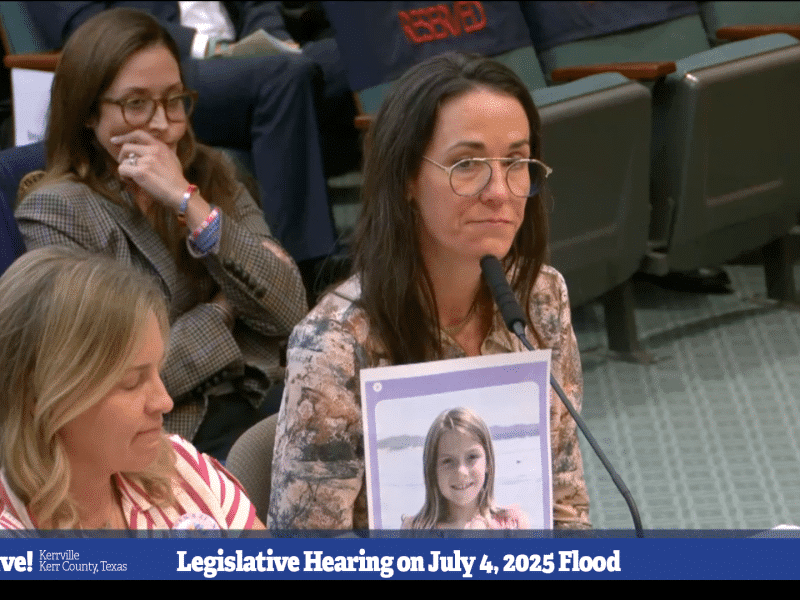
Camp Mystic faces mounting pressure to close as nine hours of testimony culminate in mother’s extraordinary plea
From legislative scolding to a surgeon’s indictment to a grieving mother turning her back on the Legislature to face the Eastlands directly, Tuesday’s hearing left little doubt about where the investigation is heading
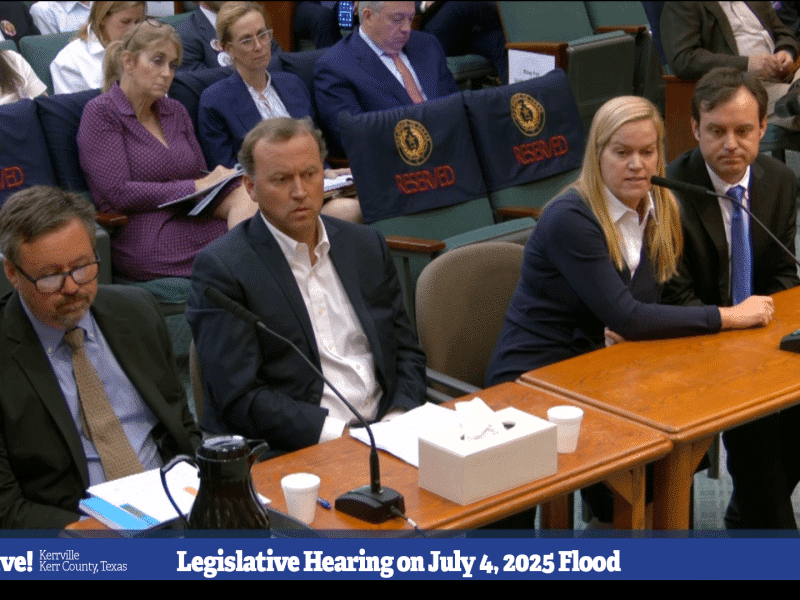
“Y’all will not be an operator next season”: Legislators scold Eastland family over flood deaths, compliance failures
The blunt assessment set the tone for a four-hour hearing in which legislators admonished the operators of Camp Mystic on multiple fronts — from the failure to evacuate 27 people who died in the July 4, 2025, flood to an ongoing violation of state law that has persisted for 10 months.
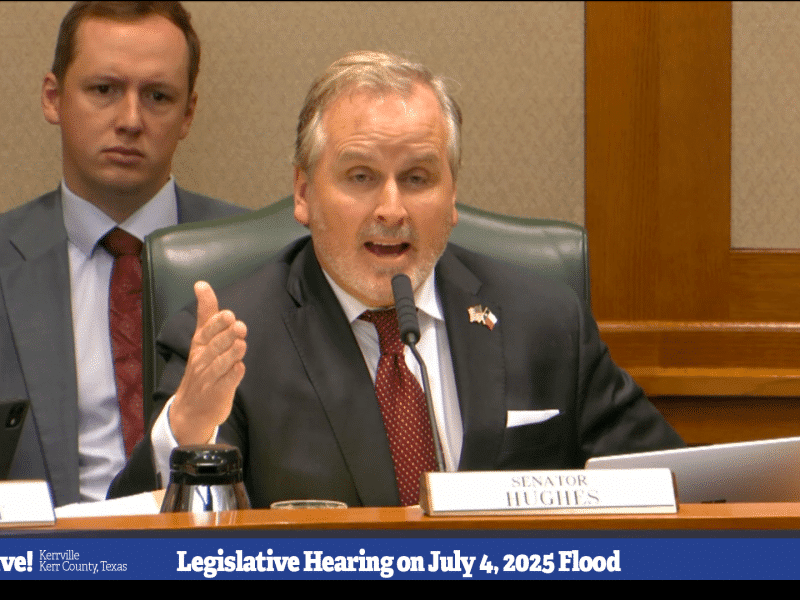
The general investigating committee examining the July 4, 2025 flood
It is charged with identifying strategies to strengthen Texas’ disaster preparedness and response, examining actions taken at youth summer camps in flood zones, and recommending legislative reforms.
Comments (0)
There are no comments on this article.