
Ed Livermore: You’d better come to the negotiating table with this president
However, the underlying message was that America appeared to be caught up in a Republican squabble, making an attack seem less likely. Again, this was merely a ruse; many right-wing figures in Congress who opposed an attack were unwittingly aiding this deception.
I’ve been reflecting on the preparation and deception strategy that led to the B-2 strike on Saturday night. Planning for this operation began many months ago, possibly at the start of the Trump administration, with the goal of minimizing various risks for the U.S., particularly avoiding a scenario similar to the Desert One fiasco. The B-2 stealth bombers, while expensive and not the most maneuverable aircraft, require a clear path to their target. Israel’s role was crucial; they were responsible for clearing the area and decapitating the Iranian leadership. In the lead-up to the strike, Israel neutralized all Iranian air defenses while the B-2s remained stationed in Missouri. The agreement between Israel and the U.S. was clear: “Israel does this first, and the U.S. will do its part second.” Both nations executed their roles as promised, which aligns with Trump’s affinity for solid deals.
In March, Tulsi Gabbard made a statement indicating that American intelligence assessed the Iranians were two years away from developing a nuclear bomb. This claim starkly contrasted with the public positions of Trump and Israel and highlighted a potential rift between our intelligence agencies and the administration, adding confusion and showcasing a lack of clear American policy. U.S. allies were understandably perplexed. However, this was actually an early part of the strategy to mislead and prepare the target. A primary goal before an attack is to “isolate the target and confuse your opponent,” which marked the beginning of this tactic.
Following that, a series of feints were implemented to soothe the Iranians into believing they had more time to react. For instance, during Trump’s visit to Saudi Arabia and other Gulf states, he notably neglected to meet with Netanyahu, creating the appearance of a rift between the U.S. and Israel. Reports even suggested that the vice president held views contrary to those of Trump, and the media picked up on this perceived split. The Iranians took note of this and resumed their typical chants of “death to America.” However, the underlying message was that America appeared to be caught up in a Republican squabble, making an attack seem less likely. Again, this was merely a ruse; many right-wing figures in Congress who opposed an attack were unwittingly aiding this deception.
This was soon followed by a genuine final diplomatic effort between the U.S. and Iran. At least the U.S. was sincere, but Iran was not. Trump’s doctrine leans heavily on negotiating deals; he’s a transactional leader, and a refusal to engage in dialogue often invokes a strong response.
Consequently, the “two-week delay” before any action against Iran’s nuclear facilities was part of the overall strategy. This period was intended to mislead Iran into thinking they had additional time, leading them to issue further idle threats. Bluster is often their “secret” weapon, but they remained unaware that the U.S. was poised for action.
The B-2 bombers left Missouri ostensibly heading for Guam, but in reality, they were locked and loaded on their way to Iran. No other intelligence agency detected their stealthy flight path, which included aerial refueling tankers.
By the first week, the path was clear for the B-2s. And then it happened: Trump fulfilled his pledge that Iran would never possess a nuclear bomb. The world dodged a potential disaster, and America was ready to settle back. However, a lingering issue remains regarding regime change. At the time of the attack, Bernie Sanders was speaking in Oklahoma when an aide interrupted to deliver news of the President’s post on Truth Social. He expressed his opposition to the strike.
The takeaway? When this President wants to negotiate, it’s crucial to take those talks seriously.
Will this prompt further negotiations on other issues, such as tariffs, with other nations? What are your thoughts?
Ed Livermore
Kerrville, TX
Author

Related Articles

MIKAL WATTS: Camp Mystic failed no one. My mission is to prove this
The Eastlands have sent a letter to the members of the newly formed Senate and House General Investigating Committees on the July 2025 Flooding Events inviting them to tour Camp Mystic in person. In addition, tours for the families have occurred and continue to occur. When they do come, they learn what our investigation has revealed.
Matthew Childress: My Hell on Earth has a mission
When flash floods hit the Texas Hill Country, plans put in place by the Eastland family, which runs Camp Mystic, instructed Chloe and Katherine to “stay in place” with their cabin of 8- and 9-year-old girls. They obeyed authority, and it killed them.
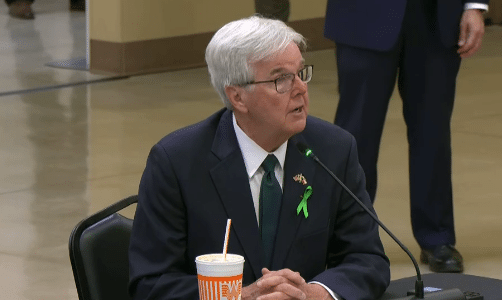
THE LEAD’S EDITORIAL: Leadership during crisis requires more than campaign rhetoric
While Patrick accused Kelly of being “nowhere to be found” on July 4th, the real question voters should ask is where Patrick’s leadership was during the 88th and 89th legislatures when flood infrastructure investments could have prevented this tragedy.
Comments (0)
There are no comments on this article.