
Federal judge expresses pointed skepticism on We The People, Liberty In Action’s claims it’s being harmed by Kerrville ordinances
SAN ANTONIO — A federal judge expressed deep skepticism of a political action group’s claims that a pair of Kerrville ordinances infringed the First Amendment.
Monday’s court hearing was a painful lesson in being prepared because Judge Xavier Rodriguez spent the first 15 minutes of the temporary restraining order hearing excoriating attorneys for We The People, Liberty in Action, for deficiencies in their case. At one point, Rodriguez rendered an attorney effectively mute, only able to blink before stammering incoherently, leading to his fellow attorney’s takeover of the discussions.
“Is there no answer from you,” Rodriguez asked Ellington, who struggled with some long pauses. Ellington noticeably reddened during the appearance, conducted over the video streaming platform Zoom.
It was not a good day for We The People, Liberty In Action in the U.S. Western District of Texas courtroom, with Rodriguez hounding attorneys Tony McDonald and Connor Ellington into how the group stood in the case or how Ingram resident and plaintiff Terri Hall was involved. The only one deemed somewhat acceptable for standing was Rachel McVickers, a Kerrville resident who owns a window-washing business.
“I can only grant relief on what is plead,” Rodriguez told McDonald and Ellington. “If you made a mistake, that’s not my responsibility. Terri Hall doesn’t have standing. I’m talking about Terri Hall.”
The central issue was the group’s plea for a temporary restraining order against the city of Kerrville, citing two specific ordinances — one related to peddling, solicitors, and canvassing, and another focused on electioneering. Hall, the apparent leader of We The People, argued that these ordinances were causing harm and violating their civil rights. Overall, the filing featured 92 objections that Rodriguez had to sort through.
Rodriguez wasn’t convinced. He repeatedly questioned how Hall, an Ingram resident, had standing in the case. Later, he urged McDonald and Ellington to remove We The People, Liberty In Action, from the case moving forward.
“I can already see the fights with this,” Rodriguez said. “I get these cases all the time.”
Rodriguez became angered when McDonald couldn’t succinctly or accurately describe the group’s membership numbers or leadership structure. Rodriguez chastised the lawyers nearly a dozen times, twice becoming so frustrated with them that he almost let slip expletives before catching himself.
“Another mistake by you all,” Rodriguez told them. “What is this entity (We The People, Liberty In Action)? Where have you stated that any of these are citizens of the city of Kerrville?”
Rodriguez said he would rule on a temporary restraining order by Wednesday. Still, it seems unlikely he will give We The People, Liberty In Action, Hall or Vickers anything they asked for in their complaint.
Toward the end of the hearing, during Rodriguez’s urging the We The People, Liberty In Action removal from the case, he described the group as “loosey, goosey.”
Rodriguez urged both sides to agree on whether the case would require discovery or file motions for summary judgment. Attorney Tom Brandt, who represents Kerrville, said they would seek discovery, forcing We The People, Liberty In Action to open its books on membership and finances. We The People, Liberty In Action is a nonprofit, rather than a political action committee allowing it to skirt campaign finance reporting.
Kerrville’s decision not to enforce parts of the electioneering ordinance related to the size and number of campaign signs mitigated much of Monday’s actions. The city did stick to a plan to keep tents in a designated Cailloux Theater parking lot. McDonald argued that the tent restriction was a content-based decision that violated the First Amendment. Rodriguez countered that it seemed like a reasonable request by the city, which owns the parking lot and the Cailloux Theater, to keep tents in an area that wouldn’t impact traffic.
The electioneering argument lost steam with the city’s concessions on the signs, especially as it became clear the city wouldn’t stop electioneering on sidewalks. However, these arguments came late in the two-hour hearing.
McDonald’s chief point was that the electioneering ordinances were content-specific rather than content-neutral. Brandt, the city’s lead attorney, dismissed the idea, arguing that the city attempted to accommodate all concerned with voting at the Cailloux Theater. How the ordinance is content-specific is unclear because neither McDonald nor Brandt explained the differences. However, there could be an argument electioneering is not content-specific, considering it’s a broad ordinance that doesn’t differentiate between parties and groups, which would fall under a content-specific test of the First Amendment.
The Kerrville City Council adopted the electioneering ordinances last year after the contentious 2023 Council race, which featured bickering about tent setup or who got Sandy Cailloux’s reserved parking lot. Four years ago, early voting became contentious during early voting at the Hill Country Youth Event Center after a near altercation in the parking lot.
Texas law prohibits electioneering within 100 feet of the polling location. The City Council decided to push that back, with the tents restricted to about 240 feet from the front door of the Cailloux Theater. The ordinance passed last year 4-1, with Place 1 City Councilmember Roman Garcia voting against it.
“Not only are Texans shoved in the corner far away from where they can reasonably speak to their fellow citizens, they are now to be blocked off with a “Great Wall” of election worker vehicles to make the possibility of contact even more difficult,” Hall and company said in a supplemental brief. “Hall confirms that this scheme will succeed if the city is allowed to enforce it. According to her, she would ordinarily expect to pass out 3,000 voter guides during early voting and on Election Day. However, if her volunteers are hidden in a box behind a wall of cars on the other side of the parking lot from voters, she expects they could pass out no more than 100 voter guides.”
Much of the hearing focused on We The People, Liberty In Action’s efforts to overturn the city’s ordinances on peddling, solicitation and canvassing. That argument collapsed around several points, including:
- The judge repeatedly asked how Hall could have standing challenging the ordinance since she is not a resident and her work with political or religious organizations is exempt.
- The judge said Vickers would have a case if the city denied a permit to peddle or solicit for her window-washing business.
- The time element, the city’s restriction on knocking on doors between 8 p.m. and 8 a.m., stopped the judge the most. At one point, the lawyers tried to explain that a neighbor coming over at 2 a.m. to discuss the state of the Dallas Cowboys and San Antonio Spurs would violate the ordinance. The judge said that the argument was absurd.
- When the lawyers tried to defend this claim: “The city of Kerrville’s ban on expressive conduct if there is a sign posted at private property bearing the phrases “No Solicitors,” “No Trespassing,” “or words of similar intent” violates the First Amendment Rights of Plaintiffs.” The judge asked: “Do you know where you live?” The implication was that eliminating no trespassing signs in Texas was a recipe for disaster.
- One potential problem for the city was the sidewalk regulations. Still, Brandt said there was no intent to enforce limitations on sidewalks but to limit it in medians and rights of way. McDonald said streets would be a protected First Amendment venue. Once again, Rodgriguez pushed back against McDonald. The judge asked how that could be if a street had a 45 MPH speed limit. “How is that safe?” Rodriguez asked.
Last month, the City Council faced a barrage of criticism from Garcia and his We The People, Liberty In Action allies over the peddler, canvassing and solicitor ordinance. During the March 26 City Council meeting, Garcia made many of the same claims that McDonald and Ellington made Monday.
One of Garcia’s counters to the ordinance was his insistence that there was no evidence that this was needed. He dressed down Police Chief Chris McCall, who said the ordinance would be an important tool, but Garcia dismissed that notion. That argument wouldn’t have flown Monday in Rodriguez’s courtroom.
Throughout the proceeding, Rodriguez said the city had a compelling reason to protect the interests of citizens who ask for a community free of harassment and to respect their privacy.
A final observation
The question of who paid for the legal adventure on Monday isn’t clear, but McDonald’s involvement points to far-right figures in West Texas. McDonald is listed as the general counsel for Texas Scorecard, an online publication that has written extensively about Garcia’s involvement in the peddler, solicitor and canvassing ordinance. McDonald also helped set up a group called Texas Transparency, another connection to billionaire Tim Dunn, who is a political donor and backer of Texas Attorney General Ken Paxton and Texas Lt. Governor Dan Patrick. Texas Monthly wrote an extensive profile on Dunn; you can read that here: https://www.texasmonthly.com/news-politics/billionaire-tim-dunn-runs-texas/
Author

Related Articles
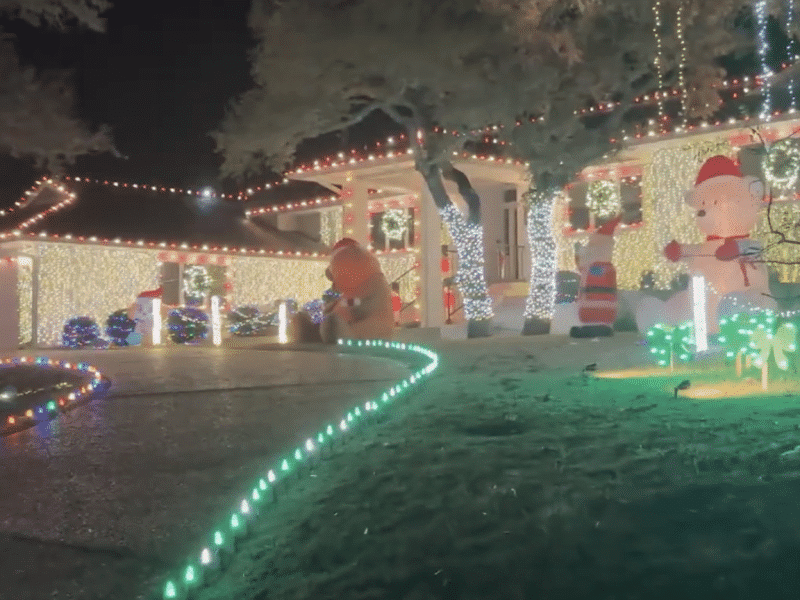
502 Riverhill Blvd. wins 2025 KPUB Kerr County Christmas Light Tour, event ends after five years
The tour, sponsored by Kerrville Public Utility Board, featured video showcases of each finalist shared on The Kerr County Lead’s Facebook and YouTube channels, where community members voted for their favorites.

Holiday cheer, live music and community gatherings fill week ahead
The calendar features more than 50 events across seven days, ranging from support groups and wellness programs to holiday markets and live entertainment, offering something for nearly every interest and age group.

Texas wildlife officials warn of avian flu risk as migratory birds arrive
The virus poses particular risks to domestic cats, skunks, foxes, raccoons, bobcats, mountain lions and black bears, which typically contract the disease by consuming infected animal carcasses. Backyard poultry can also become infected through contact with wild birds.
Comments (0)
There are no comments on this article.