
Ingram man aims to worm his way to better gardening, agriculture
Worm castings improve soil porosity and retain moisture, making nutrients readily available to plant roots.
INGRAM, Texas — Miles Pitman aims to transform waste into a valuable resource with his new venture, Hill Country Wurm House. Focused on producing worm castings, also known as vermicast or worm poop, Pitman addresses critical environmental challenges in the Hill Country.
Pitman appeared on “The Lead Live” on April 4, 2025, to discuss his business and its mission. He explained that Hill Country Wurn House tackles three main problems: food waste, soil moisture retention, and topsoil loss. Red wiggler worms, his primary workers, process organic waste, diverting it from landfills and creating a biologically rich soil amendment.
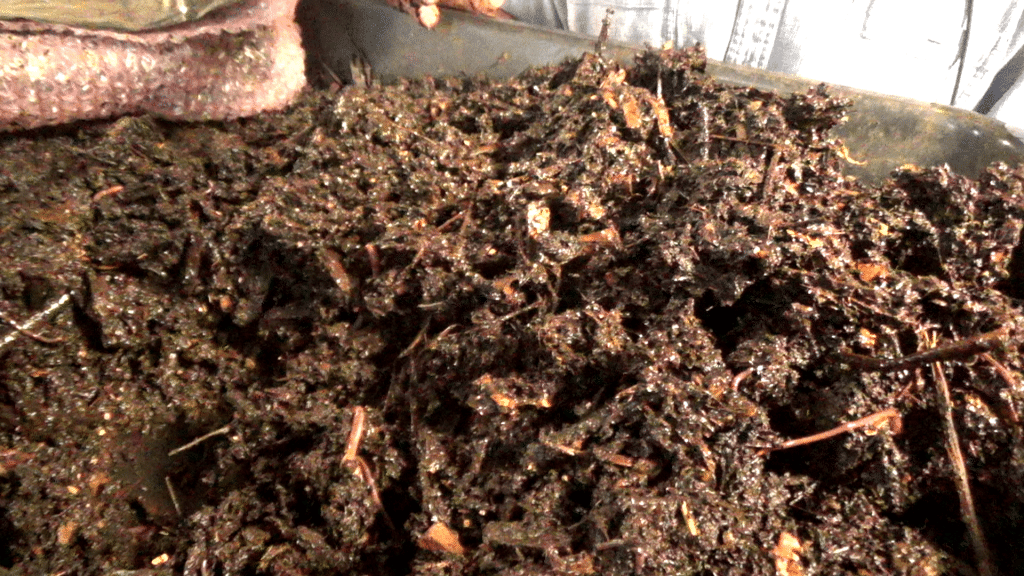
“Now I am managing organic wastes with biological organisms known as worms or more specifically the red wiggler,” Pitman said during the interview.
Worm castings improve soil porosity and retain moisture, making nutrients readily available to plant roots. Pitman demonstrated the effectiveness of his product by showcasing two tomato plants, one grown with worm castings and the other without. The plant grown with castings appeared lusher, greener, and had more blooms.
Pitman detailed his process of hot composting food waste before feeding it to the worms. He blends nitrogen, carbon, water, and air to create a compost that reaches temperatures between 130 and 150 degrees Fahrenheit. This process breaks down the food waste, making it easier for the worms to process.
“Here’s food waste. I hot compost thermophilically in a pile for about 1 to two weeks,” Pitman explained. “Then I take the compost, I feed that to my worms.”
The final product, worm castings, consists of 90 to 99 percent worm poop. Pitman emphasized the slow-release nutrient properties of the castings, noting that only 10 to 20 percent per volume is needed. “This is a super biologically rich and dense soil amendment,” he said. “It’s a slow-release base soil amendment.”
Pitman’s clients include master gardeners. He offers a food waste management service, providing buckets and collecting waste. Clients can choose to receive a portion of the worm castings or have them donated. Currently, Pitman operates in a year-long proof-of-concept phase to assess the viability and need for his business.
“The game plan is actually just to develop a year-long proof of concept,” Pitman said. “I’m right now just collecting a lot of data and building relationships and networks and really just proving it to myself and the market that this is viable and it is also needed.”
Pitman also brought a breeder bin of red wiggler worms to the show, explaining their reproduction process involving cocoons. Each cocoon contains multiple worms. He pointed out other beneficial microbes in the bin, such as springtail mites, which aid in decomposition. The worms primarily feed on fruit and vegetable waste.
“All they really do is eat, poop, reproduce,” Pitman said. “And this is my breeder bin. So I have worms in here that are just for breeding.”
Pitman currently sells castings and has a waitlist for his food waste collection services. He announced he would be at the Bernie Farmers Market the following week. He reflected on the philosophical concept of waste and how his work transforms it into a valuable resource.
“Waste became really interesting to me just as a philosophical kind of concept,” Pitman said.
Pitman’s journey began in his apartment with a worm bin, then expanded to include black soldier fly larvae. However, he found worms more manageable and enjoyable to work with. Hill Country Verm House, he said, plays off the original Latinized and Germanic term for worm castings, vermicast.
“If you’re interested in talking about worms or if you want to manage commercial food waste, I’d love to talk to you,” Pitman said.
Author

Related Articles
Community Foundation awards $10 million grant for small business flood recovery
“Small businesses are essential to the Hill Country’s recovery,” said Austin Dickson, CEO of the Community Foundation. “They create jobs, anchor our local economy, and provide the everyday services our communities rely on.”
In a major economic blow, Megaacrete cancels Kerrville manufacturing plant deal
Hornes called the termination “a bummer” after three to four years of negotiations that involved the governor’s office and multiple company visits.

KPUB moves to keep electric rates steady amid flood recovery
To maintain steady rates, KPUB’s board of trustees authorized monthly transfers from the utility’s Rate Stabilization Fund during fiscal year 2026. The move allows KPUB to defer a base rate increase recommended in its 2025 Cost of Service Study.
Comments (0)
There are no comments on this article.