
Federal healthcare fraud cases target providers, not patients
The U.S. Department of Justice announced charges in 2025 against hundreds of healthcare professionals and business owners accused of defrauding Medicare and Medicaid of more than $10 billion
While political debates rage over healthcare costs attributed to undocumented immigrants, federal prosecutors are pursuing billions of dollars in fraud cases against healthcare providers, pharmaceutical companies and medical equipment suppliers — revealing a stark disconnect between perception and prosecutorial reality.
The U.S. Department of Justice announced charges in 2025 against hundreds of healthcare professionals and business owners accused of defrauding Medicare and Medicaid of more than $10 billion, according to court documents and agency announcements. The cases span from individual physicians billing for services never provided to sophisticated criminal enterprises operating multiple pharmacies as fronts for illegal drug distribution.
Texas cases dominate fraud prosecutions
Texas features prominently in the federal crackdown, with dozens of cases involving hundreds of millions in alleged fraud. Court records show healthcare providers in Houston, Dallas and other Texas cities accused of schemes ranging from genetic testing fraud to illegal prescription drug distribution.
Chad Harper of Pearland was charged with billing Medicare approximately $115 million for genetic testing “induced by kickbacks and bribes,” according to federal prosecutors. Another case alleges David Jenson, a podiatrist who owned a clinic north of Houston, fraudulently billed Medicare $90 million for “highly expensive skin substitutes” for patients who “did not have qualifying wounds, or any wounds at all.”
Federal agents seized over $70 million in cryptocurrency and $13 million from Jenson’s clinic account, court documents show.
The numbers behind the narrative
The scale of provider fraud prosecutions contrasts sharply with data on immigrant healthcare usage. A Congressional Budget Office analysis found that undocumented immigrants are ineligible for traditional Medicaid benefits, with emergency Medicaid spending representing less than 1% of total Medicaid expenditures.
“Emergency Medicaid spending was $3.8 billion in FY 2023 and was 0.4% of total Medicaid spending that year,” according to KFF, a health policy research organization.
Meanwhile, individual fraud cases prosecuted by the Justice Department often exceed those amounts. The DOJ’s 2025 National Health Care Fraud Takedown included what prosecutors called “the largest health care fraud case by loss amount ever charged” — a multi-billion dollar scheme involving durable medical equipment companies.
Political Rhetoric vs. Prosecutorial Focus
Recent political statements have emphasized healthcare costs attributed to undocumented immigrants. President Donald Trump claimed legislation would “kick millions of Illegal Aliens off of Medicaid,” though fact-checkers noted that undocumented immigrants are not eligible for traditional Medicaid benefits.
FactCheck.org reported that Trump and Republican lawmakers “wrongly cast the bill as removing these immigrants from Medicaid” when the legislation actually targeted state-funded programs that “by definition” are not Medicaid.
Georgetown University research professor Leonardo Cuello told FactCheck.org: “Medicaid is when a state is accepting federal Medicaid dollars in compliance with federal Medicaid coverage rules.”
Provider fraud: A Texas-sized problem
Texas cases in the federal fraud sweep illustrate the complexity and scale of provider fraud:
— Sacha Lashun Betts and associates allegedly controlled “more than a dozen ‘front’ pharmacies” that distributed “more than 4.4 million doses of opioids and other commonly abused prescription drugs, with an estimated street value exceeding $75 million.”
— Khadeer Khan Mohammed, owner of American Premier Labs in Richardson, allegedly submitted “$93 million in false and fraudulent claims” to Medicare for genetic testing, with Medicare paying “$65 million,” including “$13 million over a single ten-day period in 2023.”
— Multiple Houston-area pharmacy owners were charged with operating “pill mills” that distributed millions of opioid pills to street dealers rather than legitimate patients.
Immigration and healthcare: What research shows
Academic research consistently finds that immigrants use less healthcare than U.S.-born citizens. A KFF analysis found that “annual per capita health care expenditures for immigrants are about two-thirds those of U.S.-born citizens ($4,875 vs. $7,277).”
The Institute on Taxation and Economic Policy reported that “undocumented immigrants contribute billions in federal, state, and local taxes each year” and “pay more into the health care system through taxes and health insurance premiums than they utilize.”
Enforcement priorities
The Justice Department’s Health Care Fraud Working Group lists priority enforcement areas including Medicare Advantage fraud, pharmaceutical pricing schemes, and kickback arrangements — all targeting healthcare industry practices rather than individual patient abuse.
The DOJ encourages healthcare companies to report violations and operates a tip line at 800-HHS-TIPS for fraud reports.
“Healthcare fraud and abuse depletes taxpayer funds, corrodes public health and safety, and undermines the integrity of the federal healthcare system,” according to a joint DOJ-HHS statement announcing the working group.
The disconnect between political rhetoric and prosecutorial focus reflects broader debates about immigration and healthcare policy. While emergency Medicaid spending for undocumented immigrants represents a fraction of 1% of total Medicaid costs, individual provider fraud cases often involve hundreds of millions in alleged theft.
Author
Related Articles

Kerrville to explain Elm Creek Pipeline, a drought water-supply plan, at Wednesday meeting
The city will take questions on a project that would return highly treated reclaimed water to the Guadalupe River upstream of Kerrville’s drinking-water intake during severe droughts.

Kerr County judge declares local disaster over New World screwworm threat
The declaration took effect immediately and will remain in place for seven days, after which it will go before the Kerr County Commissioners Court at its regular open meeting Monday, June 22, for consideration of an extension.
Flood watch covers Kerr County from tonight through Tuesday evening
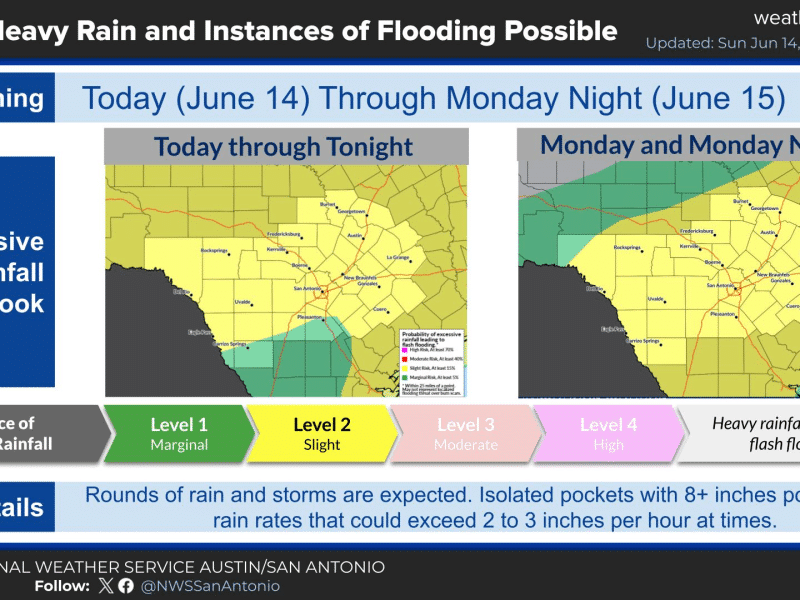
The watch takes effect at 7 p.m. Sunday and runs through Tuesday evening. It covers 33 counties stretching from the Hill Country to the Rio Grande and the coastal plains, including Kerr, Bandera, Gillespie, Kendall, Real and Edwards.
Comments (0)
There are no comments on this article.