
Texas NIL law opens door for high school athletes to cash in on fame
Texas A&M head coach Mike Elko emphasized the competitive necessity at SEC Spring Meetings, telling KBTX: “The current law says we can’t do revenue sharing and so I would imagine that would be a significant disadvantage for our football programs, if everyone else in the country can do revenue sharing and we can’t.”
Texas high school athletes 17 and older can now sign lucrative name, image and likeness deals after Gov. Greg Abbott signed House Bill 126 into law Thursday, marking a seismic shift that could transform recruiting and put the state’s major universities at a competitive advantage.
The law took effect immediately and allows colleges to directly pay athletes up to $20.5 million annually starting in the 2025-26 school year, according to On3 sports news. More significantly for high school athletics, it removes previous restrictions that limited NIL deals to college athletes only.
“This is a game-changer with official visit season now here,” Pete Nakos of On3 reported on social media platform X. “A top recruit in Texas, who is 17 or older, can now hypothetically ink a marketing agreement with an NIL collective before enrolling in a college.”
The timing could be particularly relevant for communities like Kerrville, where future stars like 2012 Heisman Trophy winner Johnny Manziel drew massive crowds during his junior and senior years at Tivy High School. Under the new law, a player generating similar excitement today could potentially profit from that popularity while still in high school.
Universities Push for Competitive Edge
Texas universities lobbied heavily for the legislation after expressing concerns about falling behind in recruiting. Texas Tech University System leaders had previously asked Abbott to temporarily waive the old law, saying Texas schools “might be at a big disadvantage when recruiting athletes for the school year that starts next fall,” according to The Texas Tribune.
Rep. Carl Tepper, R-District 84, who authored the bill, told KBTX that recruiting pressures drove the urgency.
“Recruiting is in full force in the summertime and we want to make sure that Texas has every advantage of any other state,” Tepper said.
Texas A&M head coach Mike Elko emphasized the competitive necessity at SEC Spring Meetings, telling KBTX: “The current law says we can’t do revenue sharing and so I would imagine that would be a significant disadvantage for our football programs, if everyone else in the country can do revenue sharing and we can’t.”
National Settlement Drives Change
The legislation aligns Texas with the pending House v. NCAA antitrust settlement, which will distribute $2.75 billion to college athletes who played from 2016 onward and establish national revenue-sharing standards. KERA News reported that federal Judge Claudia Wilken extended the settlement deadline to June 27, with national revenue sharing expected to begin July 1.
The Texas law includes a forward-looking provision giving precedence to NCAA rules and court orders over state law, meaning legislators won’t need to revisit the issue as national standards evolve, according to KERA News.
Safeguards for Younger Athletes
The law includes protections for younger students, prohibiting anyone under 17 from entering NIL arrangements with universities or third-party entities. State Sen. Brandon Creighton, R-Conroe, who helped craft the age restrictions, said the amendment “ensures that the guardrails are there for a level playing field for our young athletes,” according to College Sports Network.
Existing restrictions remain in place barring deals with alcohol, tobacco, sports betting companies and sexually oriented businesses. Athletes must also complete financial literacy courses.
Universities Prepare for New Era
At the University of North Texas, Athletic Director Jared Mosley expressed confidence about meeting new financial requirements. The American Athletic Conference established a $10 million minimum its schools must share with athletes over three years once revenue sharing takes effect, KERA News reported.
“Our baseline total revenue share number in this first year will position us well on the path to satisfying and surpassing the $10M minimum investment over the first three years,” Mosley wrote to the Denton Record-Chronicle.
The University of Texas at Austin plans to fully fund every sport by maximizing roster limits under the settlement. Athletics Director Chris Del Conte announced plans to adjust season ticket prices to cover costs, telling supporters in February: “I’m doing this, y’all, because I’m trying to maintain the very best athletic program in the country.”
The legislation passed with overwhelming support — 125-19 in the House and 31-0 in the Senate — after the legislature added the under-17 prohibition. The two-thirds majority in both chambers enabled immediate implementation rather than waiting until September.
Abbott’s signature puts Texas ahead of most states in implementing revenue-sharing capabilities, though Ohio Gov. Mike DeWine signed a similar executive order Tuesday allowing immediate direct payments to college athletes.
The law represents the culmination of efforts that began when Texas Tech regents wrote to Abbott in November 2024 warning that without changes, “Texas universities will be at a significant disadvantage in recruiting and retaining student athletes for our programs.”
For high school athletes like those who might follow in Manziel’s footsteps at schools across Texas, the new law opens unprecedented opportunities to monetize their athletic talents before stepping foot on a college campus.
Author
Related Articles

Kerrville to explain Elm Creek Pipeline, a drought water-supply plan, at Wednesday meeting
The city will take questions on a project that would return highly treated reclaimed water to the Guadalupe River upstream of Kerrville’s drinking-water intake during severe droughts.

Kerr County judge declares local disaster over New World screwworm threat
The declaration took effect immediately and will remain in place for seven days, after which it will go before the Kerr County Commissioners Court at its regular open meeting Monday, June 22, for consideration of an extension.
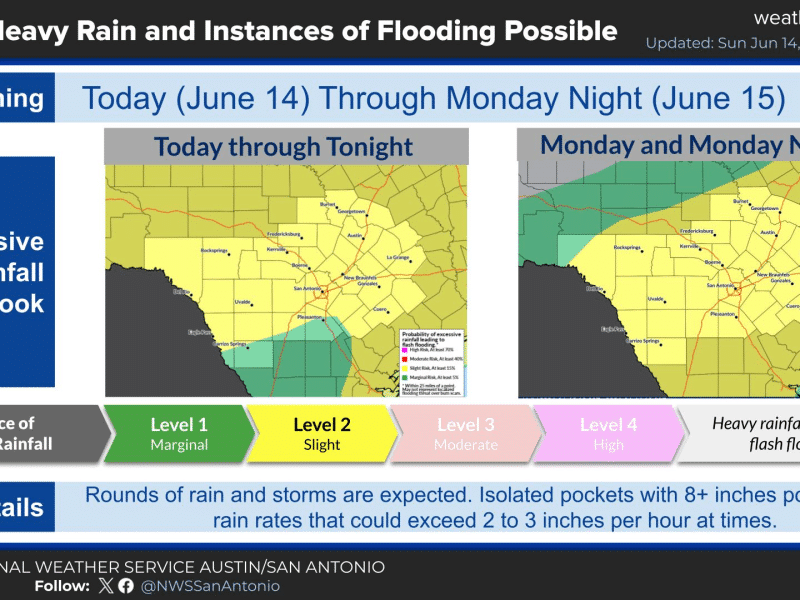
Flood watch covers Kerr County from tonight through Tuesday evening
The watch takes effect at 7 p.m. Sunday and runs through Tuesday evening. It covers 33 counties stretching from the Hill Country to the Rio Grande and the coastal plains, including Kerr, Bandera, Gillespie, Kendall, Real and Edwards.
Comments (0)
There are no comments on this article.