
The future of Louise Hays Park is mapped out by Kerrville Parks and Recreation staff
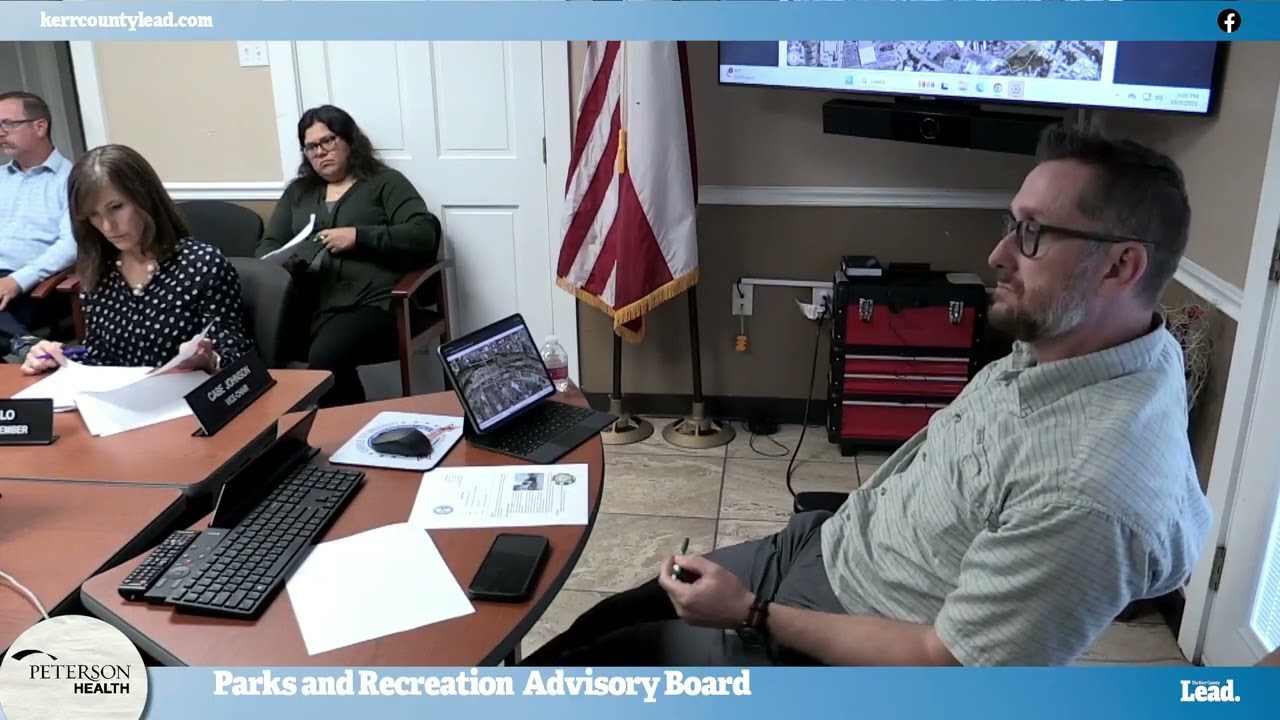
Parks and Recreation Director Jay Brimhall presented preliminary designs to the Parks and Recreation Advisory Board showing a reimagined park with features strategically relocated out of the main flood zone.
Three months after devastating floods tore through Louise Hays Park, city officials on Wednesday unveiled an ambitious master plan to transform the riverfront space into what they’re calling the “epicenter” and “heartbeat of the entire city.”
Parks and Recreation Director Jay Brimhall presented preliminary designs to the Parks and Recreation Advisory Board showing a reimagined park with features strategically relocated out of the main flood zone. The project carries an estimated price tag of $6.5 million to $10 million.
“We’re moving features out of the main flood way where possible,” Brimhall told board members at the Oct. 9 meeting. The city plans to take the proposal to the City Council for a workshop soon.
The July 4 floods swept through the park with such force that debris became embedded in shallow river areas. Over 40 vehicles of various types were pulled from the water, and debris contractors have removed an estimated 2 million cubic yards of material — about 75% of the total cleanup.
In a major milestone, park staff announced the gates to Louise Hays Park would reopen to the public Oct. 10, though vehicular traffic remains restricted. The river trail is partially open, but areas west of the Francisco Lemos Bridge will take longer to restore.
The centerpiece of the new design is a memorial splash pad and all-inclusive playground positioned on higher ground near the current dog parks at adjacent Monroe-Lehmann Park. The playground will feature sensory elements and prioritize accessibility, while the splash pad is designed as a wet/dry, year-round attraction.
A custom glass-fiber-reinforced concrete sculpture of a Guadalupe bass will be incorporated into the splash pad, memorializing “Lupe the bass,” a fish that became a symbol of resilience after surviving the flood.
The project has drawn enthusiasm from community groups. Dog park users expressed support for relocating the facility slightly east with separate areas for large dogs and “timid” dogs.
Not all elements of the plan received unanimous support. Proposed pickleball courts in a flood zone area raised concerns about noise levels and potential impact on surrounding residential apartments and the peaceful river environment. However, park officials said the location addresses high demand for the sport while accepting that flood-prone areas may require periodic repairs.
Other planned features include:
- A boardwalk and river trail loop extension, possibly including an elevated, “Arcadia back porch-style” boardwalk running from the library to an overlook
- An adult recreation area near a relocated fitness court and a proposed covered basketball court
- Natural and artificial shade structures throughout the park
- Increased parking for new recreational spaces
A more portable performance stage to replace the previous stage, which had poor orientation relative to the sun
The park lost significant vegetation in the floods, prompting partnerships with Trees for Houston (also known as Trees for Texas) and the San Antonio Botanical Gardens.
Trees for Houston, a nonprofit organization, will provide trees to Louise Hays Park and Kerr County free of charge and maintain them for two years, the most critical period for establishment. Planting is expected to begin when weather cools, from November through January.
Because local nurseries cannot supply the required quantity, replacement trees will be sourced across Texas. Staff plans to keep replacement trees as close as possible to the genetic type previously existing in the park.
The San Antonio Botanical Gardens will cultivate bald cypress seeds from existing trees in the area to improve adaptation. Staff anticipates that 100 seeds may yield 30 viable trees.
The board also discussed showing a “full-on riparian repair with all natives” in Louise Hays Park, particularly relevant because the flood washed away both native and invasive species. Park staff accepted a suggestion to reduce or eliminate mowing along the river edge to help stop erosion, plant native grasses and trees, and support the ecosystem.
A River Working Group is addressing the invasive axis deer population and potential removal strategies, as the deer negatively affect plant survival. Texas Parks and Wildlife has strategies for deer removal, but the city would need to request assistance.
Beyond Louise Hays Park, the board supported moving forward with other smaller funded projects:
Guadalupe Park will receive an inclusive playground and pickleball courts with partnerships from organizations, including the NBA, tapping into the nearby Dietert Center for intergenerational play.
Singing Wind Park will receive a disc golf course installation using ARPA funding, with a time limit. Concerns were raised that two specific holes on the hillside might conflict with future mountain bike trail designs, but staff assured the board that professionals in both fields would coordinate planning before irreversible work begins.
Bird blind project at Kerrville-Schreiner Park is nearing completion and is expected to draw more visitors and revenue to Kerrville.
While both Monroe-Lehmann Park and Louise Hays Park remain closed to vehicular traffic, pedestrian and bike access continues as the city works toward full restoration.
Author

Related Articles
National Weather Service warns of all severe hazards tonight; retired meteorologist calls it potentially ‘one of the most dangerous days’ of the season
Hail, tornadoes and damaging winds expected to peak overnight across southern Edwards Plateau and western Hill Country

Concordia sweeps Saturday doubleheader to claim series from Schreiner
The Schreiner University softball team dropped both ends of a Saturday doubleheader to Concordia University Texas, 13-4 and 6-4

The Lead Live Podcast: Tuesday, Jan. 13, 2026 episode
The broadcast included a recap of the previous day’s Commissioners Court meeting, where officials approved a “platinum” flood warning system in partnership with UGRA and Kisters North America.
Comments (0)
There are no comments on this article.