
Lawsuits filed on behalf of 8 Camp Mystic victims allege negligence, ‘Stay in Cabins’ policy
The lawsuits name Camp Mystic LLC, the Eastland family members who owned and operated the camp, and related corporate entities as defendants. They seek unspecified damages and allege negligence, gross negligence, premises liability and violations of state youth camp safety regulations.
Two wrongful death lawsuits filed Monday in Travis County District Court represent eight of the 27 people who died in the July 4 flood at Camp Mystic, alleging camp leadership prioritized profits over safety and ordered campers to remain in flood-prone cabins despite warnings of “life threatening flash flooding.”
The lawsuits name Camp Mystic LLC, the Eastland family members who owned and operated the camp, and related corporate entities as defendants. They seek unspecified damages and allege negligence, gross negligence, premises liability and violations of state youth camp safety regulations.
The larger lawsuit, filed in the 455th District Court, represents the families of five campers and two counselors who died in the Bubble Inn and Twins cabins. A separate lawsuit filed by Douglas Getten in the 459th District Court represents his daughter Ellen Elizabeth Getten and names two additional defendants not included in the first suit: William Neely Bonner III and Seaborn Stacy Eastland.
Defense Attorney: ‘No One Is to Blame’
The lawsuits face pushback from an unusual source — a plaintiff’s attorney who investigated the flood and concluded Camp Mystic is not at fault.
Mikal Watts, a plaintiff’s lawyer who lives in Mountain Home, announced he has agreed to defend Camp Mystic and the Eastland family pro bono, arguing that “the facts here demonstrate that this is one of those occasions where no one is to blame.”
“By profession, I am a plaintiff’s lawyer,” Watts wrote in a statement. “So when the July 4 floods killed 119 people in my home county – Kerr County – I began investigating, seeking fault I could use in bringing lawsuits for the victims. But an important impediment quickly became obvious to me – the facts of what actually happened.”
Watts testified before the Senate Select Committee on Disaster Preparedness and Flooding and argues that the tragedy resulted from systemic failures in flood detection and warning systems, not camp negligence.
“Had such a system been installed, using technology that has been available now for decades, those at Camp Mystic would have heard a warning siren long before the flood ever reached the camp,” Watts wrote, noting that Kerr County sought but was denied state funding for a $5 million automated flood warning system.
Watts disputes several key allegations in the lawsuits, arguing that no cabins were within FEMA’s 100-year floodplain, that the cabins where victims died were more than 8.5 feet above that elevation, and that “the surge left a water mark eight feet above the floor of their cabins.”
He also defends the Eastlands’ actions during the evacuation, stating that Dick and Edward Eastland “successfully evacuated scores of girls to higher ground, starting with the most vulnerable locations closest to the river and working their way up in elevation.”
According to Watts, Dick Eastland died trying to evacuate girls from Bubble Inn when his vehicle was swept away, and Edward Eastland was swept away in chest-high water while trying to help girls in the Twins cabins.
“Had these young girls been told to run for it in the midst of a dark maelstrom, instead of being evacuated by the Eastlands, many more lives might have been lost that morning,” Watts argued.
‘Stay in Cabins’ Policy Alleged
The lawsuits, however, paint a starkly different picture of events.
According to the first lawsuit, camp leadership received a flash flood warning from the National Weather Service at 1:14 a.m. on July 4 but spent more than an hour directing grounds crew to secure camp equipment before beginning to evacuate any cabins.
“Richard and Edward Eastland spent the next hour and fifteen minutes working to keep Camp equipment dry while they watched the river swell with flood waters,” the lawsuit states, referring to the camp’s co-owner and his son, who served as camp director.
The lawsuit alleges the camp maintained a written policy that prohibited evacuation during floods, stating: “In case of flood, all campers on Senior Hill must stay in their cabins. … Those on the flats must also stay in their cabins unless told otherwise by the office. All cabins are constructed on high, safe locations.”
According to the petition, the Bubble Inn and Twins cabins where the plaintiffs’ family members died were located just 300 feet from the Recreation Hall on higher ground and 70 feet from a nearby hill.
Advance Warnings Detailed
Both lawsuits emphasize the advance warnings camp leadership received before the tragedy. According to the Getten filing, the Texas Division of Emergency Management announced on July 2 — two days before the flood — that it was activating state emergency response resources due to anticipated flash flooding.
The National Weather Service issued a flood watch at 1:18 p.m. on July 3, followed by a flash flood warning at 1:14 a.m. on July 4.
The Getten lawsuit alleges that after receiving the flash flood warning, camp leadership spent time “creating a ‘plan’ with family members and others” and did not begin moving children from their cabins until approximately 2:30 a.m. According to that petition, defendants “did not even attempt to evacuate the youngest girls in Bubble Inn until before 4:00-5:00 a.m.”
Watts acknowledges the 1:14 a.m. flash flood warning but argues it “simply was not enough for Camp Mystic to act in time,” placing blame on inadequate flood detection systems and lack of automated sirens rather than camp leadership’s response.
Chaotic Evacuation Described
The first lawsuit alleges that between 2:30 a.m. and 3:30 a.m., camp leadership evacuated five cabins to the Recreation Hall but ordered counselors and campers in six remaining cabins — including Bubble Inn and Twins — to stay in place.
“The Camp has no explanation for why it failed to tell the Bubble Inn and Twins girls to walk to Rec Hall at that same time,” the lawsuit states. “It would have saved the lives of 27 young girls.”
According to the petition, Richard Eastland drove to Bubble Inn around 3:35 a.m. and attempted to load campers into his vehicle in what the lawsuit describes as “waist-deep water that became neck-deep.” His vehicle was swept away, and he was found dead the next day with campers inside the car, according to the lawsuit.
The lawsuit alleges Edward Eastland went to the Twins cabins at the same time and told campers they had to stay because “the water would go back down.” When flood waters rose, some campers swam out to avoid drowning while others were swept from the cabin, according to the petition.
Century of Flood History
The lawsuits extensively document the camp’s flood history, alleging Camp Mystic had a long history of flooding that put ownership on notice of the danger.
The suits cite:
- The “Great Flood” of 1932 that swept away several cabins (seven victims died elsewhere along the river, and the lawsuit notes that camp management acknowledged “the outcome at Camp Mystic could have been much worse had the flooding occurred at night”)
- A 1978 flood that severely damaged the camp and required evacuation of more than 100 campers (33 people died in Kerr County during that flood)
- A 1985 flood that cut off access during Willetta Eastland’s pregnancy
- A 1987 flood that required evacuation of campers from Bubble Inn
Watts acknowledges these prior floods but argues that “those levels were nowhere close to the water levels experienced on July 4, 2025,” with several local officials calling it “a thousand-year flood event.”
According to the petitions, most of the girls’ cabins at the Guadalupe River site were in FEMA’s 100-year “Special Flood Hazard Area” before 2013, when the camp successfully requested that FEMA remove the cabins from floodplain maps — a move the lawsuit alleges was done to save money on insurance and building requirements rather than to address actual flood risk.
Watts disputes this characterization, stating that the 2011 flood-plain maps “were corrected and amended in 2013 through a process known as a Letter of Map Amendment to recognize that finished floor elevations of those buildings are above the 100-year base flood elevation.”
At least twelve structures at Camp Mystic remained fully within FEMA’s 100-year flood plain, with more partially in that zone, according to the Getten lawsuit.
Ironic Quote From Co-Owner
The lawsuit cites Richard Eastland’s role on the board of directors for the Upper Guadalupe River Authority, where he championed flood warning systems in the late 1980s and early 1990s. The petition quotes him telling the Austin American-Statesman in 1990: “I’m sure there will be other drownings. People don’t heed the warnings.”
Inadequate Emergency Plans Alleged
Both lawsuits allege Camp Mystic’s emergency planning was woefully inadequate despite the known flood risk.
According to the Getten filing, the camp’s written emergency instructions consisted of “only a single page addressing all emergencies that could arise during the camping session, with a mere seven sentences devoted to flood procedures.”
The emergency plan instructed campers to await instructions over a loudspeaker system, despite the camp’s knowledge that floods regularly caused power failures that would render such systems useless, the lawsuit states.
On July 4, power did fail, and counselors were not permitted to have their cell phones, leaving them unable to communicate with camp leadership, according to the petition.
The first lawsuit describes counselors and campers resorting to “primitive forms of flashlight blinking in an attempt to attract much needed help from staffers and the Eastlands.”
Watts argues that cell phone alerts are insufficient in river valleys where cell service is unreliable, and that the real failure was the lack of automated sirens that would have provided earlier warning.
“Anyone who has ever driven the road adjacent to the Guadalupe River between Hunt and Camp Mystic learns quickly that there is no available cell service,” Watts wrote. “With no cell coverage, there is no warning – unless we also have sirens.”
Corporate Structure Challenged
Both lawsuits name several corporate entities that owned and operated the camp. According to the first petition, the Eastlands created a structure in 1998 that separated ownership of the land (Natural Fountains Properties Inc.) from operation of the camp (Camp Mystic LLC) while maintaining control over both.
The Getten lawsuit goes further, seeking to “pierce the corporate veil” and arguing that the individual defendants “inadequately capitalized Camp Mystic to perpetuate the scheme” and “underinsured Camp Mystic” to limit liability.
“The Individual Defendants used various companies to hold assets used at or by Camp Mystic so that those assets could not be used to satisfy any liabilities incurred by Camp Mystic,” the Getten petition alleges.
Intentional Infliction of Emotional Distress Claim
The Getten lawsuit uniquely includes a claim for intentional infliction of emotional distress, alleging that camp leadership “repeatedly communicat[ed] to Plaintiffs that there was hope that their daughter was still alive even though Camp Mystic and the owners and directors knew dead bodies had been found.”
“Defendants’ continuous lies and harassing and confusing statements to Plaintiffs and others were intentionally painful, hurtful, and humiliating,” the lawsuit states.
Focus on Belongings, Not Accountability
Both lawsuits criticize the camp’s response in the aftermath of the tragedy.
According to the Getten filing, as early as 9:37 a.m. on July 5 — less than 24 hours after the flood — Camp Mystic was already communicating with parents about retrieving material belongings rather than taking responsibility for the deaths.
“Even now, inexplicably, the Camp has refused to accept an ounce of responsibility for the deaths of the counselors and children on July 4, 2025,” the Getten lawsuit states, noting that Camp Mystic has announced plans to reopen its Cypress Lake location next summer.
The first lawsuit also notes that the camp “has been publicly soliciting donations to rebuild so the Defendants can go back to business as usual,” calling the promotion of reopening “not only unthinkable – it is offensive to the memories of the deceased and the families and loved ones they left behind.”
Watts, however, frames the camp’s cooperation differently, noting that “the Eastlands have sent a letter to the members of the newly formed Senate and House General Investigating Committees on the July 2025 Flooding Events inviting them to tour Camp Mystic in person” and that “tours for the families have occurred and continue to occur.”
Victims Represented
The first lawsuit was filed by Yetter Coleman LLP on behalf of:
- Warren and Patricia Bellows, representing their daughter Anna Margaret Bellows
- Blake and Caitlin Bonner, representing their daughter Lila Bonner
- Matthew and Wendie Childress, representing their daughter Chloe Childress, a counselor
- Ryan and Elizabeth DeWitt, representing their daughter Molly DeWitt
- John and Andrea Ferruzzo, representing their daughter Katherine Ferruzzo, a counselor
- Ben and Natalie Landry, representing their daughter Lainey Landry
- Lindsey McCrory, representing her daughter Blakely McCrory
All are Harris County or Dallas County residents.
The Getten lawsuit describes nine-year-old Ellen as “beautiful from the inside out” who “never met a stranger.” According to the petition, it was Ellen’s first year at Camp Mystic, and she “loved her role as a little sister” and was “inseparable” from her older sister Gwynne.
“Her body was not recovered for two more days,” the lawsuit states.
Defendants Named
Both lawsuits name:
- Natural Fountains Properties, Inc. DBA Camp Mystic, Inc.
- Mystic Camps Family Partnership, LTD.
- Mystic Camps Management, LLC
- Camp Mystic, LLC
- Willetta “Tweety” Eastland
- Edward Eastland
- Mary Liz Eastland
The Getten lawsuit additionally names:
- Seaborn Stacy Eastland (identified as an owner of Natural Fountains Properties, Inc. since at least 1998)
- William Neely Bonner III (identified as president of Natural Fountains Properties, Inc.)
According to the filings, Richard “Dick” Eastland and Willetta “Tweety” Eastland were the Owners and Executive Directors of Camp Mystic since 1974, representing the third generation to manage the camp since the Eastland family acquired it in 1939. Edward and Mary Liz Eastland served as Directors at Camp Mystic Guadalupe River.
All defendants are required by Texas law to maintain a registered agent but have failed to do so, according to the petitions.
Damages Sought
Both lawsuits seek actual damages including conscious pain and suffering before death, mental anguish, funeral expenses, loss of companionship, and lost earning capacity. They also seek exemplary damages for gross negligence and intentional infliction of emotional distress.
According to Texas civil procedure rules, both petitions state they seek monetary relief in excess of $1 million.
The July 4 flood killed 25 campers, two counselors and camp co-owner Richard Eastland. One camper, Cile Steward, remains missing.
Camp Mystic has not publicly commented on the lawsuits beyond Watts’ statement defending the camp.
Author

Related Articles
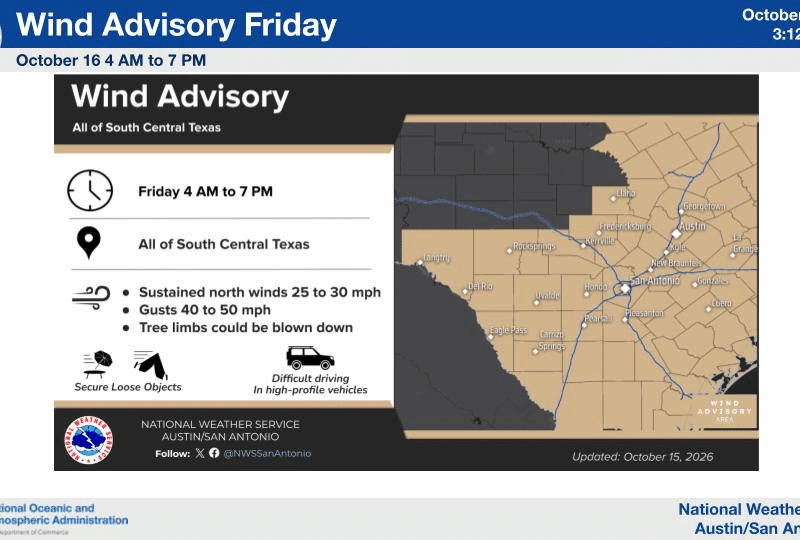
Wind advisory issued for Friday as strong cold front moves in
The front is expected to arrive a little earlier than first forecast, sometime after midnight. Winds will shift to the north at 15 to 25 mph, with gusts up to 35 mph. There’s a 50% chance of showers after 1 a.m., but rain amounts in Kerr County should be light, less than a tenth of an inch.

Texas political notebook: Talarico back on the trail, Paxton’s Dubai problem and a Senate race that keeps tightening
Republican nominee Ken Paxton’s campaign demanded “proof of life,” launched a tip line for Talarico sightings and promoted missing-person posters.

Missed an emergency alert call? Kerr County’s new system will let you call back and hear it
The county still uses CodeRed for emergency notifications, but Leitha said CodeRed will be phased out in February, and the county is using the time until then to transition to Everbridge.
Comments (0)
There are no comments on this article.