
Screwworm returns to Texas as Kerrville’s revamped federal lab opens for the fight
The U.S. Department of Agriculture on Wednesday confirmed the detection of a New World screwworm in a calf in Zavala County, the first case in the United States and the first in Texas since the pest began pushing north out of Central America in 2023.
The flesh-eating parasite that a pair of Kerrville scientists spent their careers learning to defeat is back in Texas — and the federal laboratory that carries their names, reopened here just last week, is positioned to be one of the places the fight is waged.
The U.S. Department of Agriculture on Wednesday confirmed the detection of a New World screwworm in a calf in Zavala County, the first case in the United States and the first in Texas since the pest began pushing north out of Central America in 2023. The sample, from a three-week-old calf with larvae in its umbilical area near La Pryor, was confirmed at the USDA’s National Veterinary Services Laboratory in Ames, Iowa. Officials say there have been no other detections.
The detection landed roughly a hundred miles southwest of Kerrville — and seven days after USDA’s Agricultural Research Service cut the ribbon on the rebuilt Knipling-Bushland U.S. Livestock Insects Research Laboratory on Highway 16, just north of Interstate 10.
The timing is almost too neat. The lab is named for Drs. Edward F. Knipling and Raymond C. Bushland — the USDA researchers who developed the sterile insect technique that wiped screwworm out of the United States, Mexico and Central America. Knipling first proposed in 1937 that the pest could be controlled by releasing sterilized males; in the early 1950s, Bushland — working at the Kerrville lab — proved it could be done. Bushland died in Kerrville in 1995.
That same technique is what the government is now rushing back into the field. As TPWD and the Texas Animal Health Commission noted in announcing the case, targeted releases of sterile screwworm flies are being expedited around the detection site, paired with movement restrictions and an established infested zone meant to keep the pest from spreading.
The Kerrville facility is built to feed that fight. The 52,000-square-foot lab houses two ARS research units — the Livestock Arthropod Pest Research Unit and the Veterinary Pest Genetics Research Unit — along with cattle facilities and a genomics core. Researchers there are working on surveillance and trapping tools, new insecticides, pesticide-resistance management and insect genomics aimed at finding the pest’s vulnerabilities. It is, as the Hill Country Community Journal noted last week, an almost hidden gem of the Hill Country that most Kerrville residents have never heard of.
The stakes are familiar to anyone who runs cattle. Texas leads the nation in cattle production, an industry worth about $15 billion a year to the state. The screwworm fly lays eggs in open wounds and orifices, and its larvae burrow into living tissue, a painful and often fatal condition called myiasis. It primarily hits livestock but can infest pets, wildlife and, less commonly, people.
The case also arrives amid a political fight over how close the threat really is. On Monday, state Rep. Don McLaughlin, a Uvalde Republican, claimed the flies had reached within a mile of the border and called on Gov. Greg Abbott, Lt. Gov. Dan Patrick and House Speaker Dustin Burrows to mount a state-led emergency response modeled on Operation Lone Star. The next day, U.S. Agriculture Secretary Brooke Rollins corrected the distance to 25 miles and called McLaughlin “well-intentioned,” warning that bad information from officials causes panic. Wednesday’s confirmation came hours later.
Federal officials struck an aggressive tone. “Protecting our livestock industry is a national security issue of the utmost importance, and USDA is wasting no time in taking action,” said Dudley Hoskins, USDA under secretary for marketing and regulatory programs. Rollins has said the risk to people and to the food supply is low; USDA’s Food Safety and Inspection Service continues to oversee meat, poultry and egg products, and screwworm does not infest produce or grain.
The federal government has put about $100 million into screwworm research, traps and mounted “tick rider” patrols along the border, and ordered southern ports of entry closed to livestock. South of the line, the pest remains widespread — a recent case in northern Mexico turned up in a sheep less than 31 miles from the U.S. border, part of nearly 1,900 active animal cases in Mexico and some 27,000 since November 2024.
Ranchers and animal owners are urged to check livestock frequently, keep wounds clean and covered, and report any larvae in wounds immediately. Suspected cases in livestock or pets go to the Texas Animal Health Commission — do not move the animal. Wildlife cases go to TPWD, and any human infestation to the Texas Department of State Health Services. More information is at screwworm.gov.
Author

Related Articles
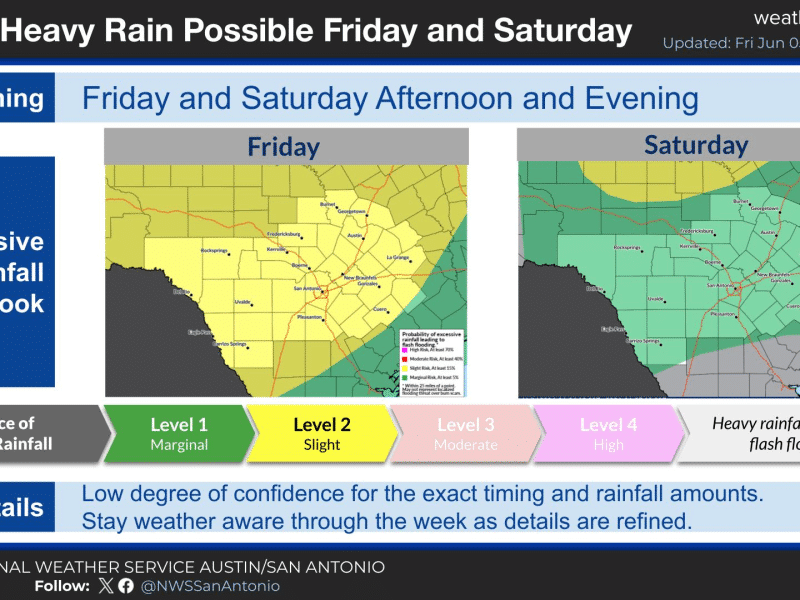
More wet weather in the forecast for the weekend
Tonight looks wetter. Showers and storms become likely before 1 a.m., with a 60% chance of rain and totals between a tenth and a quarter of an inch possible — again, higher under any stronger storms.

Texas airports rank among most stressful for families with kids, national study finds
A report by iSharing, a family location-tracking app, examined 30 major U.S. airports across nine factors and assigned each a composite stress score from 0 to 100, with higher scores indicating worse conditions for families traveling with children.
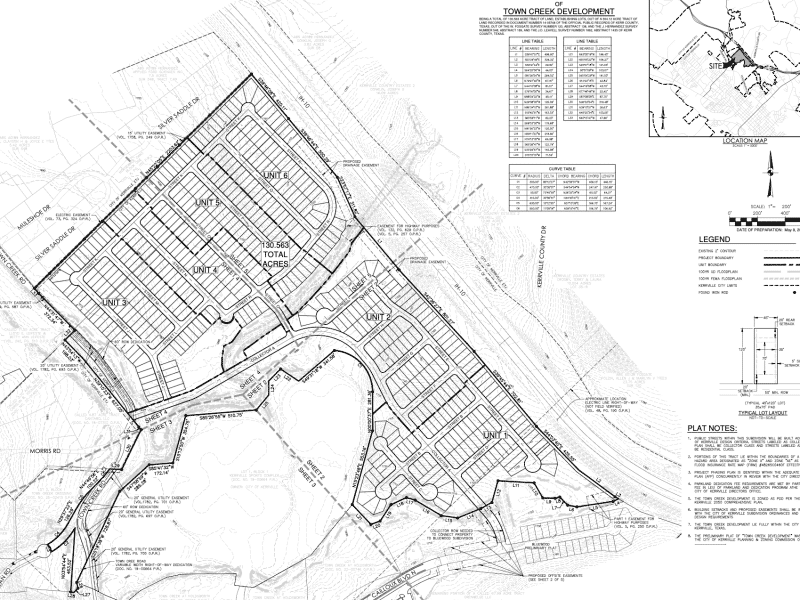
A roughly 500-home subdivision near the Sports Complex faces a key vote Thursday
The plat lays the development out in six phases, building from the Interstate 10 frontage south toward Holdsworth Drive and around the city-owned baseball fields.
Comments (0)
There are no comments on this article.