
Explainer: What kind of license plate cameras are actually watching Kerrville
The city says it doesn’t use Flock. That’s true — but it’s not the whole picture.
When Kerrville Mayor Joe Herring Jr. pushed back on public concerns about Flock Safety cameras this week, the message was direct: the Kerrville Police Department does not use Flock. That statement appears to be accurate. But it also isn’t the full story of what kind of automated vehicle surveillance operates in and around Kerrville, or how invasive it could be.
There are, in effect, several separate camera and data systems at play here — one run by the state, one run by the city, and at least two layers of private industry — and conflating any of them, in either direction, misses what’s actually going on.
System one: state-operated Flock cameras, not Kerrville’s
The Flock-brand cameras residents have identified around Kerrville and Kerr County — including a cluster of four near the intersection of Junction Highway (State Highway 27) and Harper Road, per the crowdsourced tracking site DeFlock — are not owned, funded or operated by the city or county, based on the public record reviewed by The Lead. They appear instead to be part of a rapidly expanding state program.
The Texas Department of Public Safety signed a $26 million contract with Flock last year to install cameras along state roads, in part to support Operation Lone Star, the state’s border security initiative, according to reporting this month by The Texas Tribune. DPS’s data-sharing network has grown quickly — from 122 partner law enforcement agencies in February to 206 as of early August, a 69% increase in five months. TxDOT’s role is limited to permitting where the cameras can physically go on state highway right-of-way; DPS operates them.
That distinction matters because it means the Flock cameras drawing local scrutiny are, functionally, a state decision that landed in Kerrville rather than a Kerrville decision. Nothing in the record reviewed by The Lead indicates the city or Kerr County ever approved a Flock contract or deployment.
System two: the city’s own Leonardo cameras
Separately, the Kerrville Police Department operates its own automated license plate reader network, and has for about 15 years. According to a news release KPD issued Tuesday, the department currently runs:
- Two mobile ALPR units, mounted in the city marshal’s vehicle and a KPD patrol unit, manufactured by Motorola
- Eight stationary ALPR units positioned at entryways to the city, manufactured by Leonardo US Cyber and Security Solutions
The stationary units are funded through a roughly $70,000, two-year grant from the Office of the Governor, with no direct cost to the city, according to the release. KPD said the cameras have helped recover stolen vehicles, locate suspects with active warrants, and — in one case the department highlighted — helped locate a kidnapping victim in February 2026 who was safely recovered roughly 200 miles away in Somerville, Texas, with the suspect subsequently charged with aggravated kidnapping.
Leonardo US Cyber and Security Solutions is the American security subsidiary of Leonardo S.p.A., a large, publicly traded Italian defense and aerospace company with a market capitalization in the tens of billions of dollars. Its ALPR product line, branded ELSAG, is a direct competitor to Flock’s, sold to law enforcement agencies, tolling authorities, parking operators and private facilities nationwide.
Why “not Flock” doesn’t automatically mean “less invasive”
Here’s the part that complicates a clean narrative: Flock and Leonardo are competitors selling a similar core product, and the privacy concerns driving the current backlash aren’t unique to one brand.
Flock’s most-criticized feature is its interagency “national lookup” network, which lets participating police departments search camera data from other agencies around the country — reportedly more than 5,000 of them — typically without a warrant. That network effect is what’s produced the more alarming documented misuse cases nationally, including instances of officers searching plate data in connection with protest activity or immigration enforcement rather than the specific crime the technology is marketed for.
Leonardo’s ELSAG cameras don’t appear to plug into that same kind of sprawling public national database. But the company has its own emerging capability that arguably raises sharper privacy questions than a standard plate-reading camera: a product called ELSAG SignalTrace, first reported by 404 Media in June 2026. SignalTrace is an add-on sensor that attaches to existing ALPR hardware and scans for wireless signals broadcast by nearby devices — Bluetooth, Wi-Fi, and RFID identifiers from phones, smartwatches, wireless earbuds, tire-pressure sensors, and even RFID pet microchips — and links that bundle of signals into a persistent “electronic fingerprint” tied to a specific vehicle. Leonardo’s own marketing materials describe using the system to detect “convoys,” or which devices routinely travel together, potentially mapping who someone regularly rides with or meets.
As of the most recent reporting available, no law enforcement agency had been publicly confirmed to be using SignalTrace in the field — it remains a marketed capability rather than a documented deployment anywhere.
Flock, for its part, does not currently build device-tracking into its standard cameras, according to multiple technical explainers examining the claim; the Bluetooth and Wi-Fi signals Flock cameras emit are for the camera’s own diagnostics and field setup, not for scanning passersby’s devices. Flock did build a separate product called Nova, described as a “public safety data platform” meant to supplement plate data with breach data, public records and commercial data broker information to help identify individuals — a different mechanism aimed at a similar end result.
It’s not just a government question
Public debate over these cameras tends to frame the issue as government versus citizen. That framing leaves out a third category: private ownership, which both Flock and Leonardo sell into, and which can end up feeding the same law enforcement systems residents are objecting to.
Flock markets directly to homeowners associations, condo boards, neighborhood watch groups, apartment landlords and businesses, not just police departments. More than 200 HOAs nationally have signed up with the company, according to one tracking group, and reporting elsewhere in Texas has documented individual retailers — including Home Depot and Lowe’s locations — operating their own Flock cameras on their property. Flock’s pitch to private buyers is neighborhood or loss-prevention security; the mechanism that matters is that a private owner can choose to share that camera’s data with police, at which point a camera nobody at City Hall approved becomes part of the same searchable network. One recent estimate put the combined public-and-private Flock network at close to 90,000 cameras nationally once private deployments are counted, not just government-purchased ones. Whether any privately owned Flock cameras exist within Kerrville or near the Junction Highway/Harper Road cluster is not yet established; DeFlock’s map does not appear to distinguish ownership type, and The Lead has not independently confirmed who operates each camera in that cluster.
Leonardo sells into a similar private market, though skewed more toward institutional and commercial clients than individual residential ones — its own marketing lists hospitals, casinos, college campuses, parking authorities, tolling operators and religious organizations as customers alongside law enforcement agencies.
A quieter, older private network
There’s a second, less visible layer to this that predates Flock by close to a decade and has drawn comparatively little local controversy despite doing something similar: commercially operated license plate data networks built for the finance and insurance industry.
The largest is Digital Recognition Network (DRN), headquartered in Fort Worth, and its law-enforcement-facing sister company, Vigilant Solutions. DRN sells vehicle location data to auto lenders, insurers and repossession companies — its own materials describe helping recover more than a million vehicles since 2009 and flagging drivers who insure a car in a cheaper state while living elsewhere. Vigilant sells access to the same underlying data, marketed as the National Vehicle Location Service, to law enforcement agencies nationally; the platform holds more than 2 billion plate detections and grows by roughly 70 million more each month, according to the company’s own marketing materials. Both companies have been owned by Motorola Solutions since a 2019 acquisition — the same Motorola that manufactures the two mobile ALPR units the Kerrville Police Department uses in the city marshal’s vehicle and a patrol unit.
That ownership overlap doesn’t establish that KPD’s data feeds Vigilant’s or DRN’s databases — that’s a direct, answerable question The Lead has posed to the department alongside the SignalTrace question below. But the broader point stands on its own: a private, commercially run plate-tracking network, built to serve repo companies and insurers rather than any public safety mandate, has operated with relatively little public scrutiny for years, even as a single branded product tied to a specific highway pole has become the focus of intense local debate this month.
The open question
The Lead has asked the Kerrville Police Department, through Sgt. Jonathan Lamb, whether any of the city’s eight stationary Leonardo units include the SignalTrace add-on or whether the department has plans to adopt it, and separately, whether data from the department’s Motorola mobile ALPR units is shared with or accessible through Motorola-owned Vigilant Solutions or Digital Recognition Network. As of publication, KPD has not yet responded to either question.
The answers matter. If Kerrville’s Leonardo cameras are running base ELSAG hardware only, and its Motorola units don’t feed a commercial network beyond the department’s own use, KPD’s core claim — that its plate readers only read plates, for the department’s own investigative purposes — holds up as accurately as any ALPR claim can. If either isn’t the case, the “we don’t use Flock” defense, while technically true, would understate the surveillance capability actually operating in the city.
Author

Related Articles
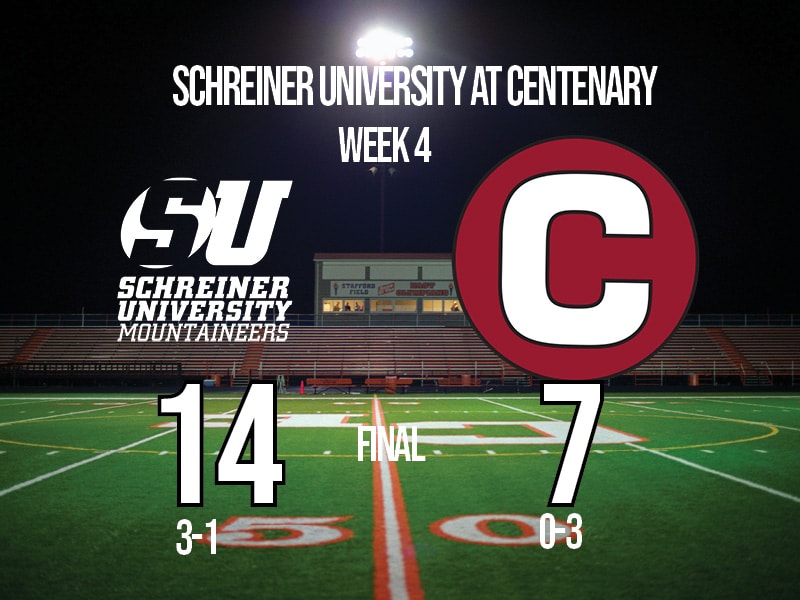
Schreiner’s defense holds on to win at Centenary for first road victory
The win moves Schreiner to 3-1 and gives the first-year program its first road victory. Its only other road trip was a 47-29 loss at Oklahoma Panhandle State on Sept. 12. Centenary fell to 0-3.
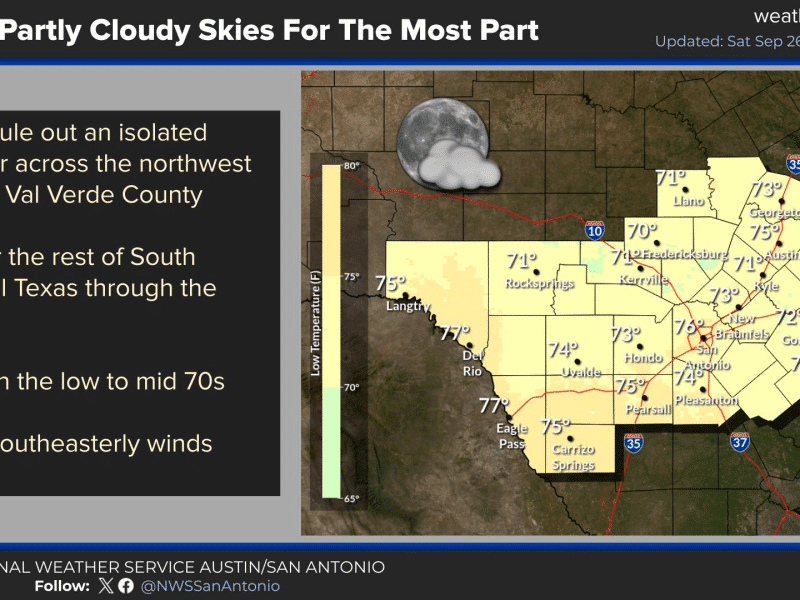
Rain chances for Kerr County now trending toward Thursday, with flash flood risk on forecasters’ radar
The trough responsible for the potential rain event was still taking shape over the northern Pacific as of Saturday and won’t reach the Pacific coast until sometime Sunday, when forecasters can begin sampling it more directly. Models have grown more consistent on the trough’s timing as it crosses the southwestern U.S., though its behavior once it reaches Texas remains a key uncertainty.
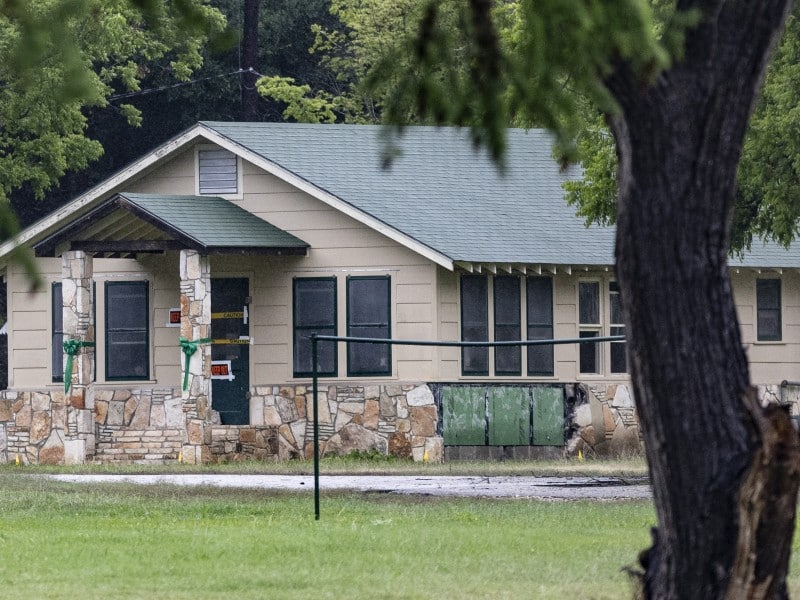
Camp Mystic owners propose selling camp, canceling Eastland family ownership
The companies expect the first bid to come from a buyer backed by a group of Camp Mystic families and alumnae.
Comments (0)
There are no comments on this article.