
Hill Country MHDD: ‘It’s okay to not be okay’ — and four mobile vans to prove it
The organization operates four mobile vans that bring mental health services directly to rural communities — including Rocksprings and Hunt — that have no local provider access.
Anthony Winn knows what a 13-month marathon feels like. He runs one.
The deputy executive director of Hill Country Mental Health and Developmental Disabilities Centers has been managing a 19-county behavioral health system through two floods, a statewide mental health funding crisis, and a workforce shortage that predates all of it. On Wednesday, he appeared on Lead Live’s Nonprofit Week to describe what his organization has built — and what the community still needs to accept.
“It’s okay to not be okay,” Winn said.
MHDD Centers, which appeared alongside Community Development Director Kelsi Wilmot, recently adopted the Certified Community Behavioral Health Clinic model — a federally recognized standard of care that ensures patients receive comprehensive, integrated mental health services regardless of ability to pay. The model has given the organization a structural framework for the kind of long-term, sustained care that disaster recovery requires rather than the crisis-response surge model that tends to arrive with FEMA.
The organization operates four mobile vans that bring mental health services directly to rural communities — including Rocksprings and Hunt — that have no local provider access. The vans serve as both routine appointment vehicles and disaster deployment assets; after both floods, they were among the first behavioral health resources to reach isolated households in remote areas.
A Mental Health Court partnership with local judiciary — operating in coordination with Judge Harris — allows the court system to route individuals whose primary challenges are clinical rather than criminal into treatment rather than incarceration. Mental Health First Aid training, led by Amy Anderson, is available to community members who want to recognize and respond to behavioral health crises in their own networks.
The flood’s psychological toll on Kerr County is not fully visible yet. Winn and Wilmot described what research shows consistently: the mental health surge from a disaster typically peaks 12 to 18 months after the event. Kerr County is, by that measure, somewhere around peak for 2025 — while simultaneously absorbing the 2026 trauma.
“The marathon recovery,” Winn said, “requires marathon support.”
Crisis line: 1-800-376-4747. Services and appointments: hillcountry.org.
Author

Related Articles

Texas Transplant Network: a kidney recipient, a grieving father, and a fund named after a 19-year-old who saved nine lives
The Texas Transplant Network, which Pendergraft founded and which received its 501(c)(3) designation in May 2025, addresses a specific financial barrier: the donor’s costs.

Symphony of the Hills opens season Oct. 8 with Weber and Brahms — and the Governor came to their July 4 concert
Dowdy, the orchestra’s conductor and artistic director, appeared alongside Board President Tim Summerlin to discuss a season that is both one of the symphony’s most programmatically ambitious in its 26-year history.
Sisters in Service: the nonprofit that shows up for other nonprofits — 11-hour days and a golf tournament coming
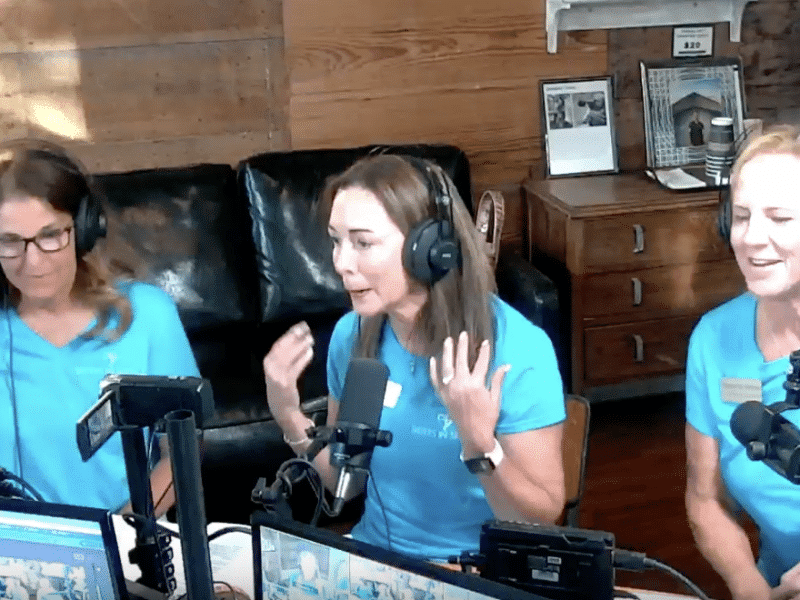
Sisters in Service began as a Bible study. It evolved into something harder to categorize — a logistics operation embedded in the Hill Country’s nonprofit network, deploying volunteers and resources wherever the gap opens.
Comments (0)
There are no comments on this article.