
5 things we learned from the nearly 12-hour Camp Mystic bankruptcy hearing
The judge ruled on when the wrongful-death lawsuits can resume and took the fight over who will control the case under advisement.
U.S. Bankruptcy Judge Christopher López heard nearly 12 hours of testimony and argument Friday in the Camp Mystic bankruptcy. He ruled on when the wrongful-death lawsuits can resume and took the fight over who will control the case under advisement. Here’s what we learned.
1. The wrongful-death suits can resume Nov. 9, with limits.
The automatic stay lifts Nov. 9 for both the camp and the individual defendants, including members of the Eastland family and William Neely Bonner III. The suits may proceed only to final judgment. No judgment can be collected from estate property without bankruptcy court approval. No money can be paid from the camp’s $6 million in insurance coverage, by settlement or judgment, without the court’s sign-off. The Baker and Marsh families, who had not yet sued, may file in state court now but must then wait for the federal courts to decide where the cases belong.
2. The decision on who runs the case will come by Oct. 19.
The U.S. Trustee, the creditors’ committee and the victims’ families want a Chapter 11 trustee. The camp wants two independent fiduciaries: retired bankruptcy Judge Craig Gargotta for Natural Fountains Properties and Mark Andrews for Camp Mystic LLC. The camp called a trustee an “extraordinary remedy.” Its opponents argued the Bankruptcy Code calls for one here.
Andrews acknowledged on cross-examination that he could not settle wrongful-death claims or override a board veto without the court. He also conceded a single trustee would have broader authority across all four debtor entities and could cost the estate less. Closing arguments are set for Tuesday at 3 p.m.
3. The Eastlands live rent-free and drive estate vehicles, and no one tracks their hours.
Chief restructuring officer Karen Nicolaou testified that no one tracks hours worked by Tweety, Edward or Britt Eastland. She said she could not say whether any family member works even one hour a week for the estate. Family members live rent-free on the 750-acre property and, along with spouses, drive estate-owned Chevrolet Suburbans and Tahoes for personal use without reimbursing the estate. Asked why, Nicolaou said management decided to “put a pin in it” until independent fiduciaries are appointed.
4. The estate has spent about $2.5 million on professionals in 90 days, and insurance covers the Eastlands’ defense.
Nicolaou said the estate incurred about $2.5 million in professional fees in the case’s first 90 days, with no operations or income. That money would otherwise be available to creditors, including the families. The camp’s insurer, AIG, is paying defense costs for both the camp and the individual Eastland defendants in the wrongful-death suits. Those costs don’t reduce the $6 million in coverage, and no total was disclosed.
5. Even the camp’s witnesses acknowledged the depth of distrust.
Committee attorney Christopher DiPompeo called the acrimony “real and deep.” Families’ attorney Jason Brookner said the camp’s actions “poured salt into gaping wounds,” citing:
- the camp’s lawsuit seeking to shield the Eastlands from the families’ suits
- its plans to reopen after the flood
- its liquidating plan, filed without consulting the families
Nicolaou called the case “polarized” and said the families’ reluctance to deal with the Eastlands was “understandable.” Andrews said the case “cries out for communication.”
What’s next: Closing arguments are Tuesday at 3 p.m., and López’s ruling on governance is due by Oct. 19. The camp’s exclusive period to propose a plan ends Oct. 22, and the stay lifts Nov. 9.
Author

Related Articles

League of Women Voters program to focus on working elections
The League of Women Voters of Hill Country Texas will hear about what it takes to work an election at its meeting Saturday, Oct. 10, at the Riverside Nature Center.

Flood loan deadline nears for nonprofits; 0% loans still available for local businesses
Kerr County nonprofits damaged in this summer’s flooding have until Nov. 2 to apply for low-interest federal disaster loans, while a separate program is offering 0% loans to small businesses in Kerr County and Comfort.
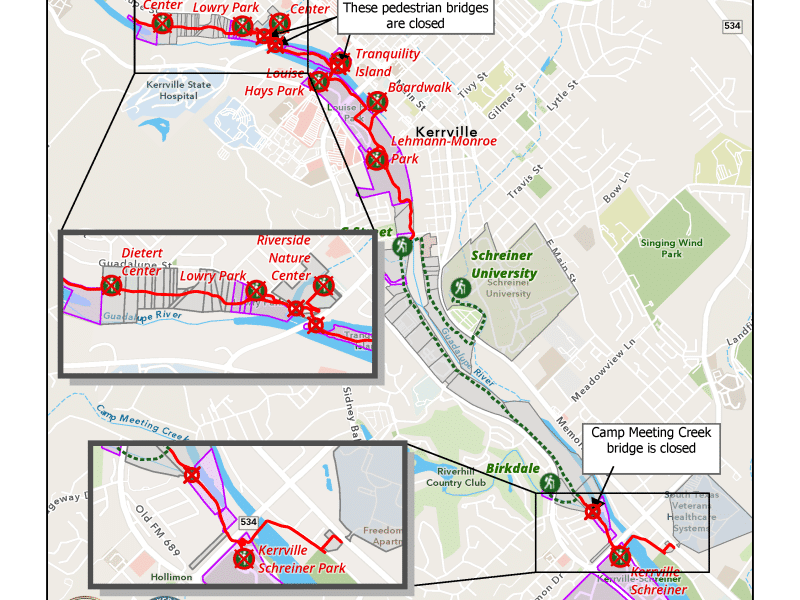
Two River Trail segments reopen Friday as flood recovery continues
The city called the reopening another step in its ongoing recovery from the July 16 flood. It credited volunteers who helped assess damage, clear debris, address hazards and restore access where conditions allow.
Comments (0)
There are no comments on this article.