
What’s happening at Big Bend, and what it could mean for your next trip
The administration plans to spend roughly $7.5 billion in the region as part of the $46 billion border wall package Congress approved last year.
For a lot of Kerr County families, Big Bend is a tradition: spring break in the Chisos Basin, a float through Santa Elena Canyon, a fall drive out to Terlingua under the darkest skies in Texas.
That tradition is now at the center of a fight that has reached the U.S. Supreme Court.
On Wednesday, the Trump administration asked the justices to lift a federal judge’s order that has halted all border barrier construction across the Big Bend region. The administration also asked the Court to throw out the ruling entirely, without full briefing or oral arguments.
How we got here
Earlier this year, the Department of Homeland Security issued three waivers covering the Big Bend Sector, the Border Patrol region that stretches 517 miles along the Rio Grande. That’s nearly a quarter of the U.S.-Mexico border.
The waivers set aside dozens of federal laws, including the Endangered Species Act and the National Environmental Policy Act, to fast-track about 340 miles of barriers and roads. The administration plans to spend roughly $7.5 billion in the region as part of the $46 billion border wall package Congress approved last year.
Construction began in September. The first wall panels went up in a 47-mile stretch of Hudspeth County, on the sector’s western end. In August, crews had bulldozed land inside Big Bend National Park near Santa Elena Canyon, prompting a backlash that crossed party lines. Customs and Border Protection paused park construction Aug. 17, a pause that expired Sept. 30.
Two days later, on Oct. 2, U.S. District Judge Kathleen Cardone of El Paso ordered all construction and ground disturbance in the sector to stop. She also suspended the waivers.
The lawsuit was brought by three plaintiffs:
- the Center for Biological Diversity
- Friends of the Ruidosa Church, a group preserving a historic adobe church near the river
- Terlingua river guide and landowner Danny “Billy” Miller
The core dispute: Is Big Bend an “area of high illegal entry”?
The 1996 law that lets the government waive these laws applies to barriers built “in areas of high illegal entry.” Cardone’s written opinion, issued Oct. 14, found the plaintiffs were likely to win their argument that Big Bend doesn’t meet that standard.
The two sides read the numbers very differently.
The government points to:
- more than 89,000 apprehensions in the sector between fiscal years 2021 and 2025
- significant drug seizures, including fentanyl, methamphetamine and cocaine
- the presence of the Sinaloa and Juárez cartels just across the river
The plaintiffs point to:
- Big Bend ranking last of the nine southwest border sectors in unauthorized crossings
- August figures showing Border Patrol arrested 161 people in the Big Bend Sector, out of 8,870 along the entire southern border
- a share of roughly 1% of all border apprehensions in 2025, according to opponents
The administration also argues that leaving Big Bend unwalled while the rest of the border is closed would turn the region into a “funnel point” for smugglers.
What would visitors actually see?
This is the question many readers have asked, and CBP’s plans have changed several times since February. According to the government’s Supreme Court filing:
- Big Bend National Park: Roads and about 17 miles of non-continuous vehicle barriers. CBP says these would have little to no effect on public access to the park or the river.
- Big Bend Ranch State Park: No barrier construction is planned.
- Elsewhere in the sector: A 30-foot steel wall, mostly on private ranch land. CBP has publicly said it will not build that wall through either park or the Black Gap Wildlife Management Area.
- Lighting: CBP says it plans to use infrared illuminators rather than stadium lighting in rural areas, to protect the region’s dark skies.
Opponents say that even vehicle barriers, patrol roads and surveillance towers would change the character of the landscape. They also say river guides, ranchers who irrigate from the Rio Grande, and wildlife would all pay a price.
Opposition that doesn’t follow party lines
Resistance has come from environmental groups, but also from ranchers, landowners, business owners and local sheriffs. Terrell County’s Republican sheriff, Thad Cleveland, a 26-year Border Patrol veteran, has spoken out against the project.
Gov. Greg Abbott told reporters in El Paso last month that DHS officials had repeatedly assured him, beginning in early July, that no wall would be built in that portion of the border. Texas Land Commissioner Dawn Buckingham has said she supports a “virtual wall” in West Texas, relying on detection technology rather than a physical barrier.
The government’s argument to the Supreme Court
The Justice Department’s main argument is about jurisdiction. Under the 2005 REAL ID Act, courts can hear only constitutional challenges to these waivers. The government says the plaintiffs’ claim is really about whether DHS exceeded its authority under the law, so Cardone had no power to hear it.
The filing notes that no court had previously upheld a challenge to one of these waivers. Among the rulings it cites is a 2019 decision by then-District Judge Ketanji Brown Jackson rejecting a similar challenge. Jackson now sits on the Supreme Court.
The government also says suspended contracts are costing more than $460,000 a day. About three-quarters of a mile of barrier had already been built at one project site when work stopped.
Plaintiffs counter that only Congress can authorize something as consequential as walling off one of the country’s most treasured landscapes.
What happens next
Under the 1996 law, cases like this skip the federal appeals court and go directly to the Supreme Court. The justices typically ask the other side to respond within days, and a decision on whether construction can resume during the lawsuit could come within weeks.
That decision would not end the case. Cardone is still weighing the underlying lawsuit.
Author
Related Articles
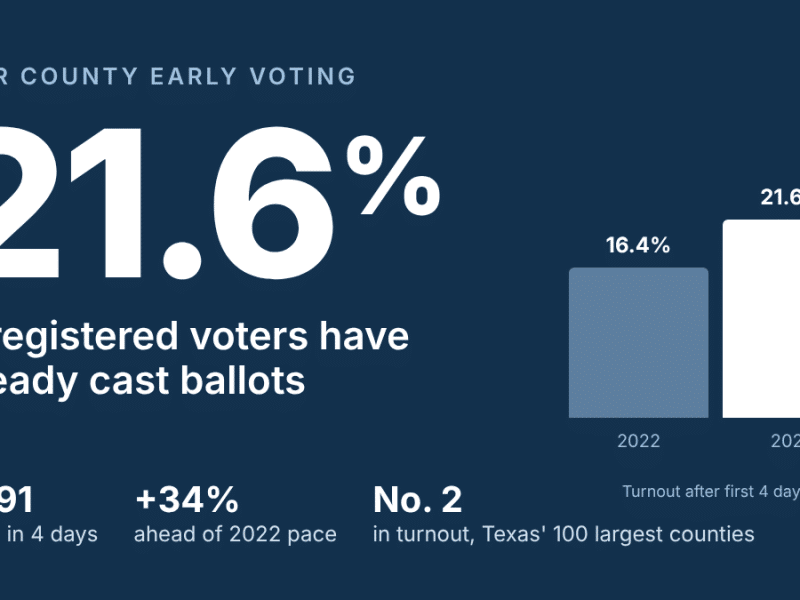
More than 1 in 5 Kerr County voters cast ballots in first four days of early voting
Through Thursday, 8,591 Kerr County voters had voted early in person, according to the Texas Secretary of State’s office.
Kelly tells GOP he can’t act on Walther before votes are counted; court hires outside lawyers
Commissioners’ Court then voted 4-1 to hire outside counsel. Pct. 2 Commissioner Rich Paces cast the lone no vote.
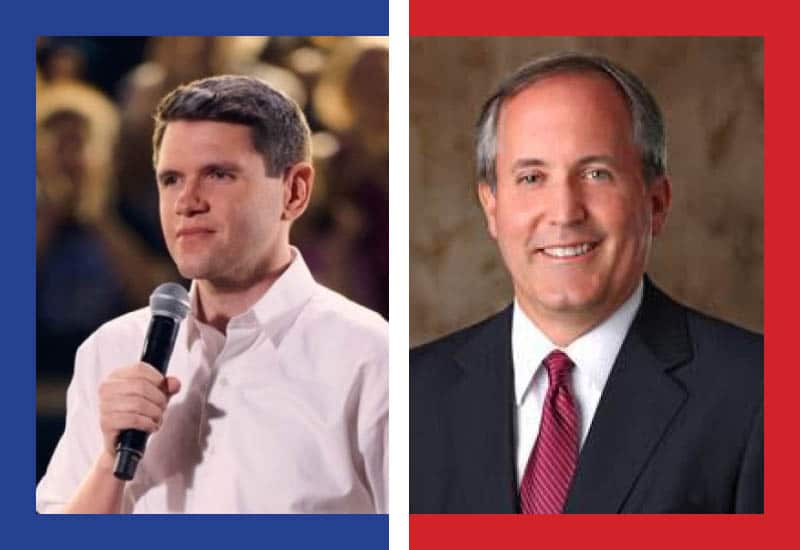
As early voting gets underway in Texas, the race for U.S. Senate looks unlike anything else on the ballot.
Every one of those leads falls within its poll’s margin of error. But the consistency is notable in a state where Democrats haven’t won a statewide race since 1994.
Comments (0)
There are no comments on this article.